Quick Summary
AI integration is transforming mobile apps from static, rule-based tools into intelligent, adaptive experiences. By using technologies like machine learning, NLP, and computer vision, apps can personalize content, predict user needs, enable smarter search and voice interactions, and deliver real-time, context-aware experiences. The result is lower user friction, higher engagement, and better retention. As competition grows, AI-driven UX is no longer a differentiator – it’s becoming the baseline for modern mobile apps.
Introduction
Today, the world of mobile apps delivers much more than just basic functionality. And AI has a pivotal role to play in this mobile revolution. Serving the digital touchpoints and influencing user experiences, applications today connect to a wider audience and help deliver products and services globally. They also assist in delivering personalized content and recommendations to the users.
Owing to all these key aspects, mobile applications can be considered a critical differentiator that flips basic UX to an engaging one. Moreover, this also leads user interactions to be real-time, dynamic, and more intuitive. And all of this is certainly possible due to the power of AI and predictive analytics. AI integration in general adds capabilities to apps that help the platform understand and interact with users smartly.
That being said, these capabilities include anticipating future user needs, delivering tailored content and recommendations, and adding adaptive UI components that are highly responsive. Herein, integrating these functionalities is certainly business-friendly, but it requires professional expertise and talent. Thus, many leaders opt for artificial intelligence development services that help embed AI correctly in the mobile app framework. Their expertise simply helps put everything in the right place, considering the architecture and intelligence that is needed from the apps.
With this in focus, this article explores the dynamics of AI integration, what it means for mobile apps, and how this improves the user experiences in the modern day.
What is AI Integration in Mobile Apps?
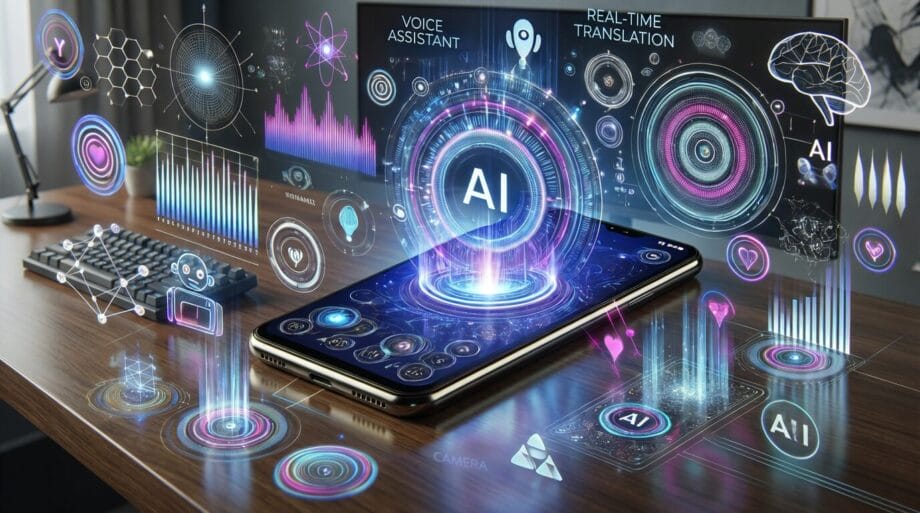
Simply put, AI integration in mobile applications means that apps are now run by leveraging AI technologies and have shifted from rule-based to intelligent workflows.
From a technical view, this means that technology powers mobile apps to work on real-time data and learning-based decisions. Furthermore, it helps analyze and adapt to user behavior changes, which practically means that now apps can dynamically adjust content, navigation, and layout for the customers.
As a result, AI integration is taking over this industry, and this is also reflected by a report shared by Grand View Research. Mainly, it states that the global artificial intelligence market was estimated to be at USD 19.42 billion in 2024, and now, it is projected to grow to USD 84.97 billion by 2030. This means a CAGR of 28.9% from 2025 to 2030.
So, AI is the real reason why mobile apps have transformed from rule-based systems to being more personalized and context-aware. Moreover, this shift enables more engagement, higher efficiency, and scalable user experiences. Hence, for companies, mobile app development is not only feature-centric, but it is an AI-driven process today.
Core AI Technologies that are Powering Mobile Apps
As we know, modern mobile applications rely on AI to work collaboratively and deliver intelligent UI and UX to the users. So, there are various technologies that power this move. For leaders, understanding this architecture is the basis for planning their mobile app development process.
With this viewpoint, this section explores the core AI technologies that are powering the mobile apps in the modern day.
1. Machine Learning (ML)
First and foremost, machine learning algorithms are the intelligence that enables collecting and processing real-time user data in systems. Mainly, this interaction data is key to detecting patterns, predicting behaviors, and optimizing app responses accordingly.
That being said, ML works on the following to deliver intelligent outcomes:
- Learning from user clicks, navigation paths, and app usage frequency.
- Enabling real-time personalization of content, features, and notifications.
- Powering recommendation engines to deliver an exceptional user experience.
- Supporting predictive capabilities such as churn prediction and next-best actions.
So, from a technical standpoint, ML algorithms replace static systems with adaptive models that can further evolve as user behavior changes.
2. Natural Language Processing (NLP)
NLP technology enables apps to understand and respond to human language in a natural manner. And it is possible because this technology works on the following few elements:
- It converts voice and text inputs into structured data.
- This data powers chatbots, voice assistants, and conversational UI to interact with humans naturally.
- This technology also leverages sentiment analysis to understand user intent and emotion.
- It also helps enhance in-app searches with semantic understanding, rather than just focusing on keyword matching.
So, technically, NLP allows mobile applications to reduce user effort while helping devices create a more accessible, human-like interaction across devices.
3. Computer Vision
Furthermore, computer vision enables mobile apps to intelligently extract meaning from images and videos that are captured through device cameras. Overall, it enables the following key features:
- Allows biometric authentication using facial recognition.
- Supports image-based search, scanning, and faster document processing.
- Powers augmented reality (AR/VR) experiences and visual overlays.
- Helps teams detect anomalies and fraud through visual pattern recognition in real time, thereby strengthening app security.
Hence, these capabilities require efficient on-device processing, which is smarter and faster. Moreover, this allows an optimized mobile app development service that focuses on performance and accuracy. Together, these technologies enable an engaging app experience for the users, which can be personalized and engaging.
Key AI Capabilities Transforming Mobile User Experience

AI-powered capabilities are definitely reshaping how users interact with mobile applications. So, by combining real-time data processing with adaptive intelligence, mobile apps can deliver experiences that are more personalized, intuitive, and responsive.
With that thought, let us explore how AI capabilities help companies in transforming their mobile user experiences.
Personalization and Context-Aware Experiences
In essence, AI is a powerhouse of technical capabilities that can make apps functional and engaging. And one of the elements that brings this engagement is personalization. Developed by artificial intelligence development services, mobile apps help tailor user experiences at an individual level, by focusing on the key elements such as:
- Behavior-driven recommendations ensure that one-size-fits-all recommendation engines are replaced with dynamic models. These help analyze user activity, preferences, and usage patterns to surface relevant content and features.
- Dynamic UI personalization further helps adjust layouts, navigation flows, and feature visibility that a user might need, based on their behavior patterns and context.
- Real-time adaptation then allows the app to respond instantly to user actions, including their location, time, or recent interactions.
Overall, AI creates a system where intelligent functions are personalized, ensuring a seamless user journey that aligns with their intent and reduces their cognitive effort.
Intelligent Search and Voice Interfaces
AI-driven search and voice capabilities indeed make mobile apps more intuitive and accessible to the wider target audience.
- Herein, NLP-powered search helps understand user intent and context by accessing user requests, comments, and reviews.
- Further, voice assistants driven by conversational UI enable hands-free interaction and faster task completion.
- Finally, improved accessibility supports users through diverse methods, using the media of voice, text, and conversational inputs.
Hence, these interfaces reduce user friction in all stages of apps (from search to purchase) and enhance usability across devices and environments.
Predictive Analytics and User Behavior Modeling
Last but not least, predictive intelligence is another power-packed element that allows mobile apps to act proactively rather than reactively. What this means is that users’ needs are well understood in advance, and their requests can be pre-processed to deliver the right solutions. Simply, it includes:
- Anticipating user needs by analyzing historical and real-time behavior.
- Figuring out the next-best action models that guide users toward relevant features or content.
- Sharing predictive notifications also delivers timely, personalized prompts without overwhelming the users with irrelevant content.
So, by leveraging predictive capabilities, apps can now reduce redundant tasks and interruptions, which helps boost engagement and improve retention across devices.
Furthermore, image recognition supports interactive elements like visual search and contactless payments. Also, AR helps create something unique for the users through visual overlays and real-time interaction. Hence, these capabilities expand how users engage with apps, blending physical and digital experiences seamlessly.
Final Thoughts

AI Integration is a big step for mobile app development. Fundamentally, it is a leap helping enterprises move forward from static to adaptive, user-friendly apps. Powered by personalized recommendations, analytics, visual searches, computer vision, AR/VR, and more, AI is a game-changer.
So, from a technical perspective, AI, when implemented thoughtfully in mobile apps, can bring in ample opportunities for a business. That being said, mobile applications are heading towards a segment where users’ needs can be anticipated and delivered before they even share the prompts with the apps.
- This means reduced user friction, improved accessibility, and better engagement.
- Moreover, this directly influences user retention, conversion, and long-term user value.
So, as mobile ecosystems are increasingly competitive, AI-driven experiences will no longer be a differentiator but a baseline expectation. And organizations need to take this leap to meet their user expectations in real-time.


