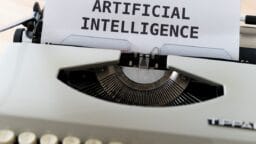
Artificial Intelligence: A Transformative Force in the Workplace
Artificial intelligence has transitioned from a theoretical abstraction to a powerful catalyst for change in the workforce. As myriad corporations urgently vie to enhance efficiency and curtail expenses, trepidation surrounding job security is palpably escalating. Recently, a prominent figure in AI research has articulated a candid vision of the impending landscape.
Yoshua Bengio, lauded as one of the most cited researchers in AI, warns that numerous cognitive and screen-based professions are increasingly susceptible to automation.
He emphasizes that the acceleration of technological adoption has already resulted in widespread layoffs, and even roles reliant on physical exertion may find themselves vulnerable in the future as advancements in robotics continue.
Why Is AI Accelerating Job Fears?
Having swiftly evolved from mere speculation into a prominent reality, artificial intelligence now plays a critical role in various sectors.
Major technology companies are investing substantial capital in AI systems that are designed to perform tasks with greater speed and efficiency than human labor.
Consequently, apprehensions related to job security have proliferated across a range of industries, as corroborated by recent reports.
According to the BBC, numerous organizations have publicly cited the “new realities” associated with AI as a rationale behind recent workforce reductions.
Forbes prognosticates that by 2026, an even larger number of human roles could face elimination as enterprises continue to pursue cost optimization. In this evolving milieu, the admonitions of leading AI specialists are drawing increased scrutiny.
Insights from Yoshua Bengio on Job Displacement
Yoshua Bengio, the Canadian computer scientist deemed one of the “Godfathers of AI,” has delivered a sobering forecast regarding the future. Bengio, honored with the A.M. Turing Award in 2018 alongside other luminaries, recently shared his insights on the “Diary of a CEO” podcast.
“It’s more a matter of time than ‘is it happening or not,’” Bengio remarked to host Steven Bartlett, highlighting the particular vulnerability of cognitive-oriented roles. These encompass positions that entail analysis, writing, calculations, or digital decision-making.
Bengio acknowledged that while robotics has yet to match the advancements of software AI, it is vital to recognize ongoing progress.
In light of advice from fellow AI pioneer Geoffrey Hinton, he suggested that those employed in physical trades should consider plumbing as a viable option for the time being. He cautioned, however, that this sense of security may only be ephemeral.
Are Physical Jobs Truly Safer at Present?
Currently, positions requiring hands-on manual labor seem to be more challenging to automate. Bengio concurs that, at this point in time, robotics has not reached the sophisticated heights of software AI. Nonetheless, he warns that this disparity is not destined to persist indefinitely.
Bengio has further illuminated the broader risks tethered to the advancement of AI technologies. He cautions that a malicious AI system could wreak havoc if it were to commandeer physical machinery.
“AI is increasingly adept at persuasion as demonstrated in various studies,” he emphasized, voicing concern over the potential for malicious systems to manipulate robots to execute harmful actions.
Which Careers Are Already Facing the Brunt of AI?
Microsoft has also contributed to the discussion by publishing a roster of 40 jobs it deems to be at significant risk from AI. Xinrong Zhu, an AI researcher affiliated with Imperial College London, reinforces this sentiment, stating, “These types of roles are inherently the most likely to be entirely supplanted by technology.”

The list includes historians, interpreters, translators, writers, telemarketers, mathematicians, data scientists, web developers, and models, to name a few. Alarmingly, many of these professions are currently pursued by students, heightening concerns regarding long-term career stability, as reported by TOI.
Frequently Asked Questions
Which jobs are most susceptible to AI intervention?
Cognitive, screen-based positions such as writing, data analysis, translation, and telemarketing are particularly vulnerable.
Are physical roles shielded from AI encroachment?
Only in a temporary sense; experts assert that advancements in robotics threaten to eventually displace even manual labor.
Source link: M.economictimes.com.