AI and Power: China’s Emerging Advantage
In an era defined by the escalating influence of artificial intelligence, the United States may hold the reins when it comes to pioneering AI models and controlling access to advanced computer hardware. Yet, China possesses a strategic asset in the global AI arena.
China has constructed the most expansive power grid known to mankind. Between 2010 and 2024, its power production surged beyond that of the rest of the globe combined, presenting formidable competition to the United States.
A recent report from The Wall Street Journal underscores this shift: last year, China harnessed electricity at a staggering rate—more than double that of the US—resulting in significant cost advantages for its data centers, which often pay less than half for energy compared to their American counterparts.
The Transformation of Inner Mongolia
The relentless pursuit of energy supremacy is radically transforming the remote landscapes of Inner Mongolia, reminiscent of Texas’s wide-open terrains, now punctuated by thousands of wind turbines and interconnected by extensive transmission lines.
This infrastructure supports what officials herald as a new “cloud valley of the grasslands,” boasting over 100 operational or upcoming data centers.
According to Morgan Stanley, China plans to invest approximately $560 billion in grid initiatives over the next five years, a notable increase from the previous five-year cycle. This escalation marks a 45 percent jump in investment.
Projections for 2030
By 2030, Goldman Sachs anticipates that China will have around 400 gigawatts of spare power capacity—triple the projected global demand for data center energy by that time.
Simultaneously, prominent tech leaders, including Microsoft CEO Satya Nadella, express trepidation over the substantial energy required to support the extensive chip acquisitions they are making.
Some companies are advocating for Washington to streamline regulations or offer financial backing to modernize the United States’ power grid, as reported by WSJ.
In the forthcoming three years, American data centers may confront a significant electricity deficiency, suggesting an arduous challenge for the nation’s aspirations in AI, according to Morgan Stanley.
The Economic Edge in China
In China, the affordability of electricity has enabled AI firms, such as DeepSeek, to cultivate high-quality AI models at far lower costs than their US competitors.
This energy initiative harkens back to 2021, when the Chinese government introduced the “East Data, West Computing” strategy, aimed at leveraging substantial power resources in the western regions to satisfy the burgeoning AI demands of the populous eastern regions.
Both nations—China and the US—face the formidable challenge of burgeoning power consumption by data centers, particularly those dedicated to AI. This energy-intensive process makes it difficult to ascertain the ultimate energy demands, as each interaction with a chatbot necessitates power to generate an AI response.
The Scale of Consumption
By 2030, China’s data centers are projected to consume electricity equivalent to the annual usage of the entire nation of France.
In comparison, US data centers have higher energy demands. Last year, they accounted for 45 percent of global data-center electricity consumption, dwarfing China’s 25 percent, according to the International Energy Agency.
China’s Power Assets
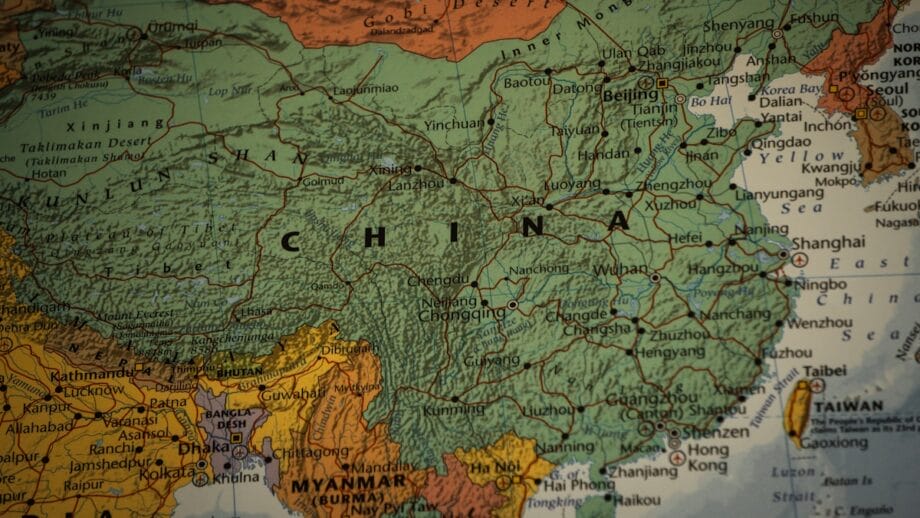
China currently boasts 3.75 terawatts of power-generation capability, more than double that of the US. The country has 34 nuclear reactors under construction, with nearly 200 more planned or proposed, according to the World Nuclear Association.
In Tibet, China is undertaking the construction of the world’s largest hydropower project, which is projected to generate three times the electricity produced by its famous Three Gorges Dam.
Source link: News18.com.