There are moments when you stumble across a software platform, and you can almost sense that someone somewhere actually thought things through. That is pretty much the feeling you get when you start digging into Unit4. Especially if you work in a nonprofit or a research-focused organization where funding streams, grants, and forecasting can turn into a daily maze.
What makes Unit4 interesting is not just that it claims to be helpful. It is the way it was built around the real tension that nonprofits face. The unpredictability. The pressure to report accurately. The puzzle of multi-year grant allocation. The emotional weight of trying to make funding stretch a little further. And the constant push to make data speak clearly enough for leadership, funders, and teams to feel like everyone is rowing in the same direction.
So let’s take a walk through the good and the not-so-good. You might find yourself nodding in recognition along the way.
What Makes Unit4 Stand Out
You’ve probably used tools that promise clarity. Tools that tell you they will make your data talk or simplify something you know can’t be simplified. But Unit4 takes a different tone. It leans into nuance instead of pretending complexity is something that can just be clicked away.
The platform’s biggest differentiator, without question, is how it handles multi-year financial planning for nonprofits. It might sound like a small thing, but if you’ve ever tried to map three grant cycles, two restricted funds, unexpected donor fluctuations, and operational overhead for the next five years, you know it is anything but small.
Data-Driven Decisions that Don’t Feel Cold
Maybe this sounds dramatic, but some financial tools make you feel like you are working against the software. Unit4 is warmer. It positions data as something helpful rather than something you should fear.
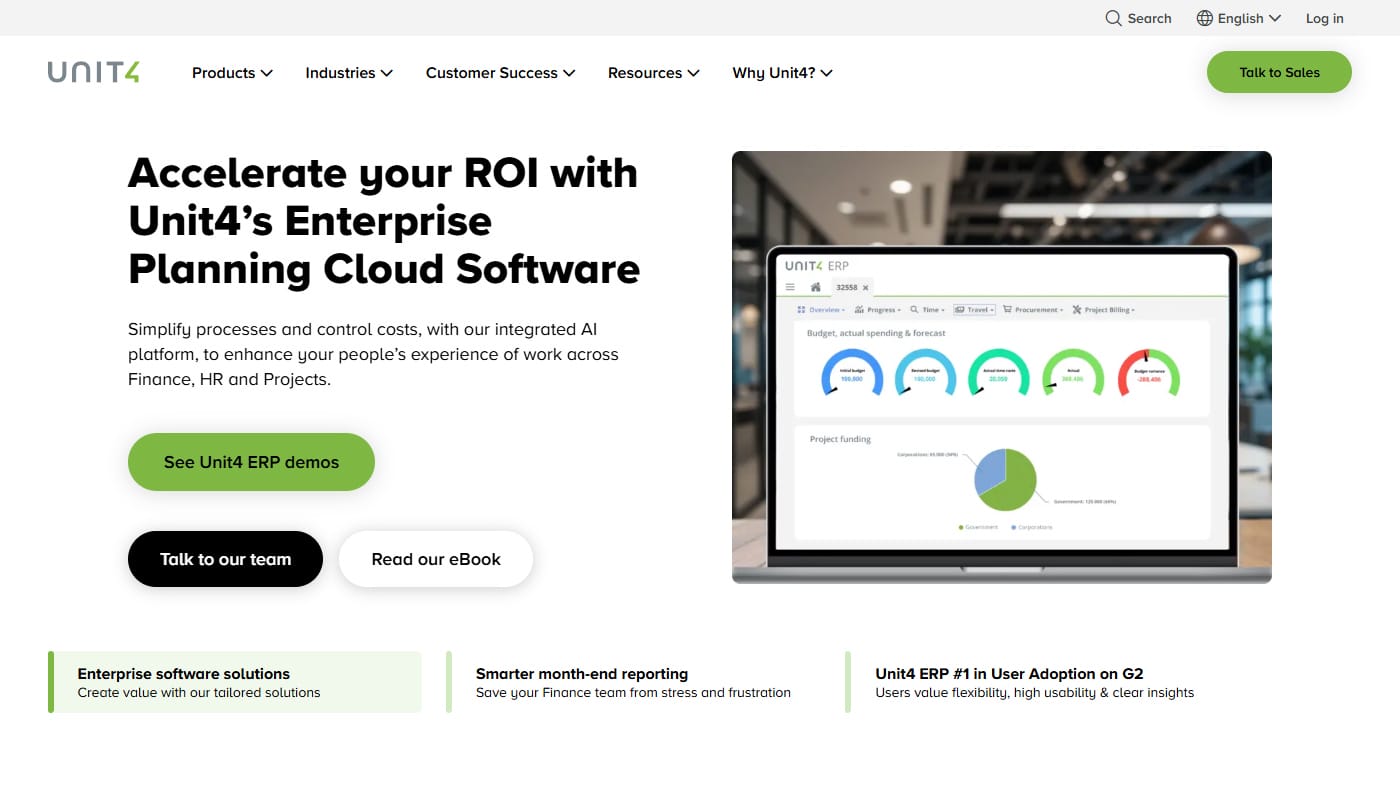
When you look at your dashboards and reports, the layout feels digestible. Not perfect, but intentional. You can tell it was designed for organizations that often have to justify every decision and still want to stay focused on their mission rather than their spreadsheets.
Pros

- A Purpose-Built FP&A Model for Nonprofits: This is the headline feature. Multi-year planning, forecasting, and grant allocation are all treated with the depth and flexibility nonprofit finance teams genuinely need. You can feel that it wasn’t an afterthought but the core of the platform.
- Highly Transparent Budgeting and Reporting: Transparency is baked into the workflows. You don’t have to hunt down data or jump through hoops to trace a number. Reports feel clear without being simplistic.
- Excellent Support for Multi-Source Funding Streams: Restricted funds, awards, grants, sponsorships. You can manage all of them in one cohesive system. It dramatically reduces errors and duplicate tracking.
- Scenario Planning That Helps Leadership Make Smart Decisions: You can test out different financial paths without breaking anything. It is great for board presentations, grant proposals, and internal planning.
- A User Experience That Feels Focused But Not Overwhelming: Unit4 doesn’t drown you in options. It also doesn’t infantilize you with oversimplified interfaces. The balance is refreshing.
- Integrations That Play Well With Other Systems: This matters more than people admit. Nonprofits rely on patchworks of tools, and Unit4 tends to blend in rather than disrupt.
- Workflows That Encourage Efficiency: There is a quiet rhythm to how tasks progress. Approvals, adjustments, reporting, and collaboration. Everything feels like it has a natural place to land.
Cons

- The Initial Learning Curve Can Feel Slow: You will need some time to get comfortable. Not because the platform is confusing, but because it is comprehensive. The learning curve is noticeable, though not painful.
- Some Customization Options Require Guidance: There are areas where you might want more hand-holding, especially when building complex financial models. You will figure it out, but guidance helps.
- Implementation Takes Patience: This is normal for any enterprise platform, but it is worth noting. You won’t plug it in today and master it tomorrow. The onboarding phase is real and should be expected.
- Slightly Less Intuitive for Very Small Nonprofits: Tiny teams with one finance person might feel the platform is almost too robust for their size. It still works, just feels like more power than they need.
These are not deal-breakers. They are more like gentle inconveniences you notice along the way. The kind you work around without hesitation because the benefits outweigh them ten times over.
What It Feels Like to Use Unit4 Long Term
This is where the meandering thoughts come in. Because once you live with Unit4 for a bit, you begin noticing odd things. Like how much calmer financial planning feels. Or how your forecasting meetings start shifting from reactive to proactive. Or how your team stops arguing about whose spreadsheet is more accurate because suddenly everyone is looking at the same source of truth.
That shared clarity changes the culture. You feel it before you can describe it.
The platform supports nonprofit teams in a way that doesn’t remove the complexity but organizes it. It doesn’t pretend your challenges are small. It simply meets them head-on.
And maybe you’ve been craving that. A piece of software that respects your mission enough to treat your data seriously without creating chaos around it.
Is Unit4 Worth It?

If what you want is a platform that simplifies financial planning for nonprofits without flattening your reality, then yes. It is worth it. More than worth it.
Unit4 understands that mission-driven organizations need systems that let them stretch resources, forecast responsibly, and allocate funding with precision. It also understands that not everything can be predicted, but much of it can be prepared for.
The platform is strong, stable, thoughtful, and surprisingly human in how it guides you. It becomes part of your rhythm, part of the way your team makes decisions, part of the way you build long-term confidence around funding.
And that is not something you find often.
If you need clarity, if you need structure without rigidity, and if you want your financial planning to feel less like a panic cycle and more like a strategy, Unit4 is a reassuring place to land.


