The Resurgence of ‘Blue Books’ in Education
Long before Apple introduced iPads to educational settings, a significant shift in examination practices unfolded in the mid-19th century. In 1857, Harvard professor Evangelinus Apostolides Sophocles, a scholar of Greek descent, famously conducted a bonfire of the newly released “blue books.”
These bound exam booklets, destined to replace oral examinations, became a source of frustration for Sophocles and loomed large in the academic experiences of countless American students.
Right now, a noteworthy revival of these blue books is underway, with sales projections showing a remarkable increase of over 100% from 2022 to 2024, as reported by Circana, a prominent data analytics firm. Additionally, the idea of reinstating oral examinations appears to be gaining traction.
Classroom Dynamics: A Response to Technological Distraction
In classrooms ranging from high schools to universities, educators are staunchly defending against technological tools that facilitate cheating and cause distractions. Laura Lomas, a literature professor at Rutgers University, has innovatively restructured her assessment techniques by requiring students to attend plays with dynamic endings to confirm their presence.
Furthermore, opting for oral presentations as opposed to AI-friendly PowerPoints, she imposes stringent restrictions on bathroom breaks during blue-book examinations to minimise the likelihood of students consulting their phones.
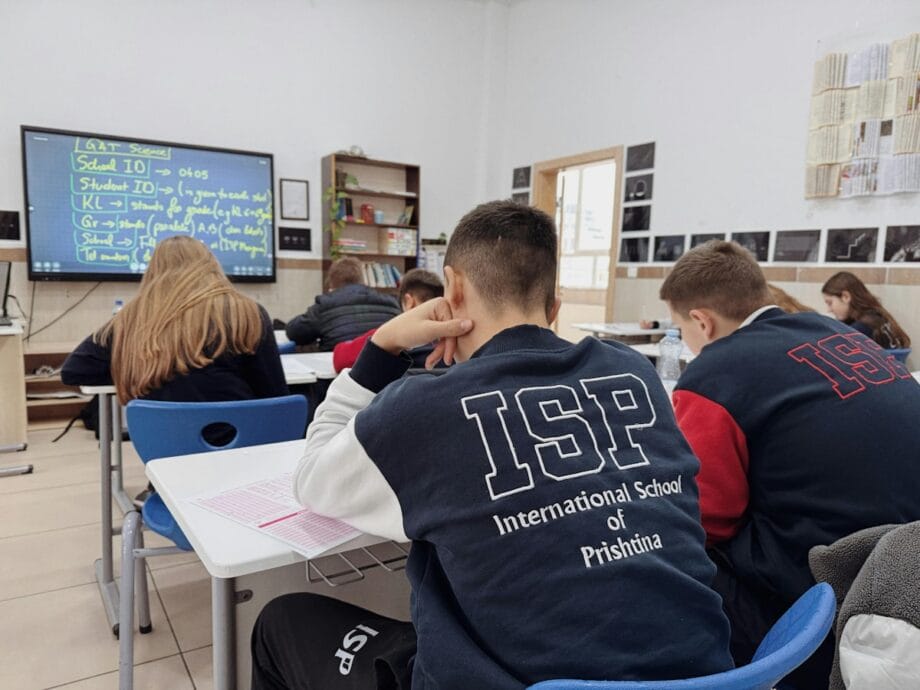
Similarly, Sara Brock, a high school English instructor in Port Washington, New York, mandates handwritten assignments during class time. Justin Reich, head of the MIT Teaching Systems Lab, remarks that homework has largely been abandoned at his daughter’s middle school, with the focus shifted towards encouraging reading instead.
Shifting Student Assessment Paradigms
This retrenchment in educational practices is expected to proliferate. A 2023 survey conducted by Intelligent revealed that 66% of high school and college educators are modifying their assignments due to the advent of ChatGPT.
Of those who are adapting, a staggering 76% are now requiring or planning to mandate handwritten submissions. Moreover, 87% expressed intent to incorporate oral presentations into their curricula.
In a separate investigation by the EdWeek Research Centre, 43% of teachers advocated for solving math problems in class using traditional pen-and-paper methods to prevent AI misuse. Notably, a Stanford University pilot program has reintroduced proctors to classrooms to oversee exam conditions.
The Global Landscape of Educational Technology
The ongoing struggle over classroom technology is echoing across affluent nations, as observed by Isabel Dans Álvarez de Sotomayor, an education expert at the University of Santiago de Compostela in Spain.
While wealthier nations curtail technological integration in educational settings, those with fewer resources rush to digitise their educational frameworks. In a pivotal change, Sweden has prohibited the use of digital tools for young learners as of 2023, shifting the focus back to physical textbooks, handwriting, and reading.
This shift is mirrored in educational policies in Denmark and Finland, which have adopted a similar philosophy.
Concerns Over Classroom Distractions
Pedagogical concerns extend beyond the pervasive issue of cheating; distractions caused by technology are equally worrying. In 2025, 56% of educators articulated that devices such as laptops, tablets, or desktops are major contributors to classroom distraction, according to another EdWeek Research Centre survey.
At Bowdoin College, a private liberal arts institution, the dean reports that numerous faculty members had designated their classrooms as predominantly device-free environments prior to the surge of AI.
The Evolving Nature of Cheating
While instances of cheating are not a new phenomenon—previous studies indicated that 87% of high school students confessed to cheating at least once within the past month—the enormity of the issue has markedly escalated in the AI age.
MIT’s Justin Reich notes, “We have countless testimonials from students revealing that they essentially forewent homework in favour of generative AI for every task.”
At the collegiate level, Lomas has encountered her own challenges, recounting an instance where a student cited an AI-generated paper attributed to her, which never actually existed.
The Benefits of Handwriting Over Technology
Research has demonstrated that while technology can enhance learning in specific subjects like algebra, the beneficial outcomes in other disciplines remain sparse. Conversely, the cognitive advantages of handwriting are garnering newfound acclaim.
A computer science instructor at Hunter College High School in New York recently reinstated handwriting for coding assignments due to its positive impact on cognitive retention and critical skill development.
Challenges in Reinstituting Traditional Methods
However, not all constituents can easily revert to traditional educational methods. Many parents face barriers to opting out of educational technology, while Derek Vaillant, a communications professor at the University of Michigan, emphasises that despite the prevailing consensus on the need to recalibrate towards original, in-person examinations, large public universities are lagging in support by failing to provide sufficient resources like teaching assistants. He points out the contradictory messaging from administrators.
Socioeconomic Disparities in Attitudes Toward Technology
Amid these developments, it is notably the affluent, highly educated parents who are advocating for reduced technology use in classrooms, as highlighted by Anne Maheux from the University of North Carolina at Chapel Hill.
In a December 2024 Pew Research Centre study, findings revealed that 58% of Hispanic and 53% of Black teenagers felt a persistent presence online, compared to only 37% of their White counterparts—revealing a significant shift in the digital divide.
Redefining Classroom Time
These changes necessitate a reimagining of classroom time. A teacher at Hunter recently assigned five handwritten literary analyses that each consumed an entire period—an approach once considered inefficient.
In a world where digital distractions reign, educators like Reich assert, “Perhaps the most valuable gift we can offer students is quiet, focused time free from distractions.”
Source link: Hindustantimes.com.