Failure to Show Electronic Devices Functioning May Result in Confiscation by Authorities
When traveling with major airlines such as TUI, easyJet, Ryanair, or Jet2, passengers are generally permitted to bring a variety of electronic devices on board. Given the modern travel landscape, almost every individual carries essentials like smartphones and laptops.
However, a lesser-known regulation at UK airports could pose a risk of device confiscation at security checkpoints—precisely due to one easily remediable error made during trip preparations.
The UK government has released guidelines for travelers on its official portal, notably elaborating on its hand luggage provisions. The advisory succinctly states, “Ensure your electronic devices are adequately charged prior to travel.”
“If your device fails to power on at the request of security staff, it will not be permitted for boarding the aircraft.”
Arriving at the airport with devices that have insufficient battery power, with the intention of charging them post-security clearance, may prove to be an error with costly ramifications.
Security officials possess the authority to require that travelers demonstrate their mobile phones and laptops are operational, as reported by the Daily Star.
Failure to ascertain that your electronics are in working order may lead to their confiscation by authorities—a possibility that is well outlined in official guidelines.
Consequently, without the capacity to prove functionality, passengers will be barred from bringing these devices onto the aircraft, according to the Liverpool Echo.
It is imperative to note that this regulation is not uniquely applicable to British airports; many facilities across Europe and the United States have instituted analogous requirements.
Additionally, it is prudent to ascertain your airline’s specific guidelines regarding permissible gadgets onboard.
For instance, most carriers allow items such as mobile phones, laptops, tablets, hairdryers, and electric razors in baggage, albeit restrictions on cabin baggage contents can vary based on the airline’s regulations.
In recent times, there has been heightened scrutiny surrounding lithium batteries. Consequently, most carriers have enacted stringent rules necessitating that these items remain in cabin baggage rather than checked luggage.
Experts from the UK Civil Aviation Authority (CAA) have flagged these batteries as a potential hazard on planes, mainly due to their susceptibility to “thermal runaway.”
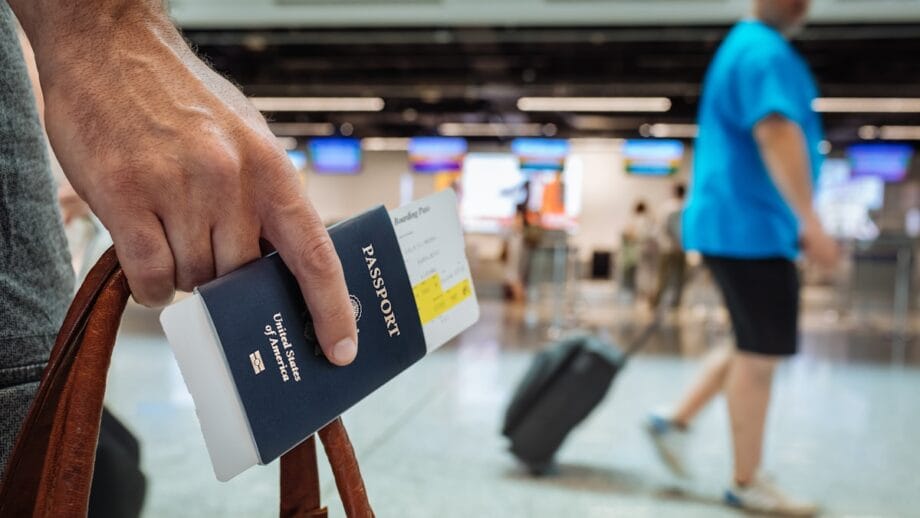
Hence, airlines such as TUI, easyJet, and Ryanair enforce rigorous protocols delineating what can be safely transported in checked baggage versus what must accompany passengers in the cabin.
Source link: Nottinghampost.com.