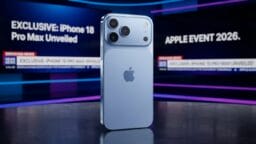
Apple’s Exceptional Fiscal Performance Surpasses Analyst Predictions
On Monday, Apple Inc. (AAPL.O) unveiled its financial results that notably exceeded Wall Street’s projections, buoyed by heightened initial demand for its iPhone 18 Pro range and strategic price increases that mitigated the adverse effects of soaring memory-chip expenses.
The company reported fourth-quarter sales totaling US$114.48 billion, surpassing analyst forecasts of US$113.39 billion, as per data from LSEG.
The fourth-quarter profit amounted to US$2.10 per share, eclipsing estimates of US$1.99 per share, even when accounting for a 5-cent-per-share exclusion regarding tariff reimbursements.
Following the announcement, Apple’s shares experienced a slight decline of approximately 1% in brisk after-hours trading.
These results emerge amid a series of pioneering initiatives under newly appointed CEO John Ternus, who assumed leadership in September.
After almost twenty years of consistently launching the majority of new iPhones during autumn, Apple has altered its timeline, introducing iPhone Pro and Duo models this year, while other variants are anticipated for release next year.
Moreover, Apple is set to unveil a plethora of new non-iPhone products during this critical holiday shopping season, including its inaugural touchscreen laptops and a new smart-home hub.
Analysts interpret this steady cadence of product releases as a strategy to stabilize Apple’s annual revenue cycle, which historically saw a spike in sales during the holiday quarter, followed by a decline as consumers awaited new releases.
In recent weeks, Apple has also addressed consumer feedback regarding screen issues with the iPhone Duo, its first foray into foldable phones, which experienced rapid sell-outs online and generated considerable in-store queues last month.
iPhone Duo Supply Challenges
During a conversation with Reuters, Ternus highlighted that “a very small percentage” of iPhone Duo units had been returned due to display complications, reassuring that Apple is facilitating replacements.
He acknowledged that the demand for these innovative devices presently outstrips supply, with no clear timeline for resolution.
“Duo is constrained as of today,” Ternus commented. “The ramp is progressing well, and we are diligently working to distribute them to our customers as swiftly as possible, yet we cannot currently forecast a balance between supply and demand.”
Apple disclosed that fourth-quarter iPhone sales, which included figures from the iPhone 18 Pro but excluded Duo sales, reached US$57.58 billion, surpassing analyst estimates of US$56.54 billion, according to LSEG data.
This strategic pivot occurs amidst challenges posed by a surge in AI-driven memory-chip prices, which Apple’s former CEO Tim Cook compared to a centennial deluge that could adversely affect the profit margins Apple traditionally secures from storage enhancements.
Price Increases Mitigate Chip Expenses
In conjunction with the launch of the iPhone 18 Pro models, Apple elevated the cost of its iPhone 17 variants by US$100 and raised certain MacBook prices, which contributed to alleviating the impact of escalating memory-chip prices.
“We recorded higher memory costs compared to the June quarter, though this was partially counterbalanced by advantages derived from inventory management and reduced expenses on non-memory components,” Ternus informed Reuters. “These price adjustments provided some respite.”
According to Apple, gross margins stood at 47.9%, surpassing analyst projections of 47.5%, based on LSEG data.
A critical consideration for Apple’s profit margins pertains to the expenses associated with its revamped AI-driven Siri, which now manages a staggering 2.5 billion requests daily.
“We have finally realized the vision for Siri we aspired to, meticulously engineered from the ground up,” Ternus remarked.
Apple reported sales of Mac computers, which have gained traction among tech aficionados as platforms for hosting AI agents, at US$10.79 billion, exceeding estimates of US$9.61 billion.

Revenue from services reached US$31.57 billion, aligning closely with analyst expectations of US$31.58 billion, according to LSEG data.
Sales figures for iPads and wearables were US$6.23 billion and US$8.30 billion, respectively, falling short of expectations of US$6.70 billion and US$9.06 billion.
Source link: Thestandard.com.hk.