Upon the launch of the iPhone 18 Pro Max in September 2026, Apple touted its significant advancements in battery longevity compared to the previous model.
However, subsequent empirical evaluations indicated that the enhancement was, in fact, rather modest.
Recent assessments by experts at Phone Arena have illuminated that although the iPhone 18 Pro Max does not exhibit a remarkable upgrade over the iPhone 17 Pro Max, it decidedly surpasses the Samsung Galaxy S26 Ultra in terms of battery stamina.
In a controlled YouTube playback test, the iPhone 18 Pro Max demonstrated an impressive endurance of 12 hours and six minutes, in stark contrast to the Galaxy S26 Ultra, which managed just nine hours and 36 minutes, highlighting a substantial disparity in battery efficacy.
Notably, both devices maintained identical brightness settings and streamed the same content throughout the testing process.
Further corroborating these findings, evaluations conducted by renowned YouTuber Mrwhosetheboss revealed similar outcomes, with both the iPhone 18 Pro and Pro Max outperforming their Samsung counterpart.
For consumers where battery durability plays a pivotal role—particularly those who engage extensively in video consumption—the iPhone 18 Pro Max emerges as the more judicious choice. What, then, accounts for this variance in battery performance between the rival smartphones?
The iPhone 18 Pro Max is Equipped with a Larger Battery than the Galaxy S26 Ultra
Battery performance is contingent upon myriad factors, including but not limited to processor efficiency and software optimization; however, the fundamental battery capacity holds paramount significance. In this department, the iPhone 18 Pro Max outshines the Galaxy S26 Ultra.
Specifically, the iPhone boasts a robust 5,567 mAh battery (eSIM variant), in contrast to the 5,000 mAh capacity found in the Samsung model. This equates to a nearly 10% increase in battery size for Apple’s device.
Historically, Samsung has consistently employed a 5,000 mAh battery across its Ultra series since the inception of the Galaxy S20, whereas Apple has methodically escalated the battery capacity of its Pro Max variants with each iteration—save for a few exceptions.
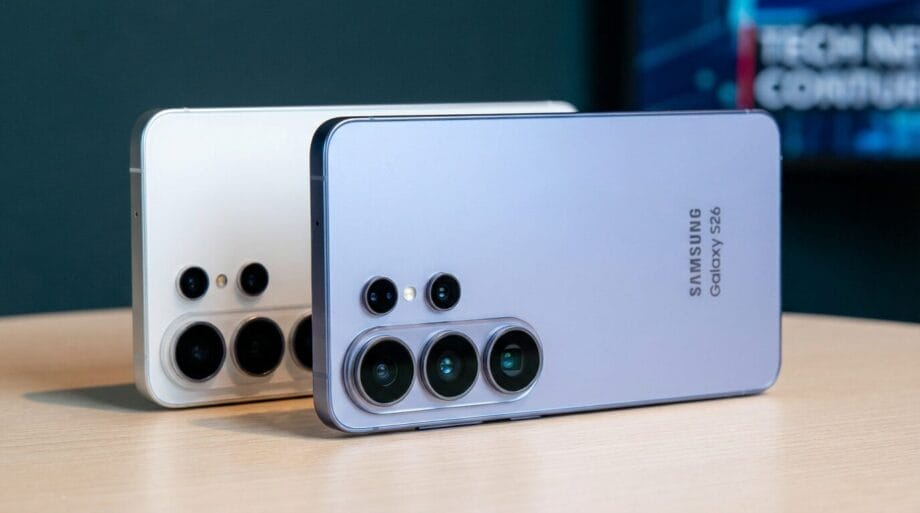
Furthermore, Apple’s stringent oversight over both its software and processors enables it to achieve enhanced battery efficiency, an aspect that poses a more formidable challenge for Samsung, where the Android operating system is managed by Google.
Additionally, Samsung predominantly integrates Qualcomm chips in the North American editions of its Galaxy S series smartphones.
Source link: Bgr.com.