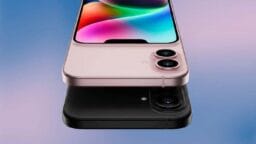
Apple Unveils iPhone 18 Pro Max with Noteworthy Upgrades
Apple’s latest flagship, the iPhone 18 Pro Max, distinguishes itself from its predecessor, the iPhone 17 Pro Max, through a series of significant enhancements.
These include a more compact Dynamic Island, a more potent A20 Pro chip, an increased battery capacity, and an innovative variable aperture camera system.
The iPhone 17 Pro Max, while retaining its original design, display, and camera specifications, is now offered at a reduced price point.
Dimensions and Design
Both models maintain the same dimensions, measuring 163.4 x 78.0 x 8.8 mm. Each features a meticulously crafted aluminum unibody complemented by a prominent camera bump, alongside a robust Ceramic Shield front and rear.
Both devices possess an IP68 rating for water resistance, allowing immersion up to 6 meters for 30 minutes. The 18 Pro Max tips the scales at 249 grams, an increase of 15 grams from the 233-gram 17 Pro Max, attributed to its larger battery and enhanced heatsink design.
Display Features
The 6.9-inch LTPO Super Retina XDR OLED display remains identical across both models, boasting a resolution of 1320 x 2868 pixels and a refresh rate of 120 Hz.
Each exhibits an impressive peak brightness of 3,000 nits, with typical brightness levels at 1,000 nits. Testing reveals approximately 800 nits in manual mode and peak performance nearing 2,800-3,000 nits on both units.
Notably, the 18 Pro Max reduces the size of the Dynamic Island by 35% by repositioning the IR camera beneath the display, resulting in an appearance that largely mirrors its predecessor for most users.
Battery and Charging Improvements
The iPhone 18 Pro Max is equipped with a 5,391 mAh battery, an increase of approximately 500 mAh over the 4,823 mAh battery in the 17 Pro Max.
This affords the 18 Pro Max a remarkable active use time of 19 hours and 20 minutes, compared to 17 hours and 58 minutes for the 17 Pro Max, with particular improvements noted in call and web browsing durations.
Furthermore, Apple enhances charging capabilities; the 18 Pro Max supports 54 W wired charging, an increase from 42 W in the previous model.
It achieves 50% charge in just 15 minutes and 81% in 30 minutes, while the 17 Pro Max reaches only 38% and 65% in equivalent durations.
Full charging times have been reduced from 72 minutes to 55 minutes, with both models supporting 25 W MagSafe wireless charging.
Audio Performance
Both models feature an advanced hybrid stereo speaker system, comprising a bottom speaker and an earpiece. The 18 Pro Max boasts a “Very Good” loudness rating of -25.0 LUFS, surpassing the “Good” rating of -26.2 LUFS for the 17 Pro Max, resulting in an enriched audio experience.
Processor and Performance Enhancements
At the heart of the 18 Pro Max lies Apple’s new A20 Pro chip, fabricated using a 2 nm process, featuring 6 CPU cores, a 7-core GPU, and 32 Neural Engine cores operating on a 96-bit memory bus.
In contrast, the A19 Pro chip powering the 17 Pro Max utilizes a 3 nm process and includes 6 CPU cores, a 6-core GPU, and 16 Neural Engine cores on a 64-bit bus.
Additionally, the vapor chamber cooling system in the 18 Pro Max is three times larger than that of its predecessor. Benchmark tests indicate approximately 48% higher AnTuTu scores, alongside a 30% increase in CPU and GPU performance metrics.
Camera Capabilities
Camera hardware remains largely unchanged, with the exception of the primary lens. The 18 Pro Max introduces a variable aperture ranging from f/1.48 to f/4.0, compared to the fixed f/1.78 aperture of the 17 Pro Max.
It retains the familiar 1/1.28″ sensor format and 48 MP resolution, complete with sensor-shift stabilization.
The telephoto lens remains at 100 mm (4x optical), while the ultrawide remains unchanged at 13 mm, and the front-facing camera retains its 18 MP resolution.
In daylight conditions, image quality remains comparable, although the 18 Pro Max tends to produce warmer tones and finer details.
Sharpness at 2x magnification demonstrates variability, with the newer model excelling in specific scenarios.
At higher magnifications, distinctions become negligible, while low-light performance shows only minor advancements.
The 18 Pro Max operates at f/1.48 in auto mode, yet does not consistently outperform the 17 Pro Max, particularly in low-light conditions where the older model sometimes exhibits sharper images.
Video Recording Capabilities
Both devices excel in video recording, offering 4K support at 60, 30, and 24 fps across all lenses, with capabilities for 4K120 at 1x and 2x on the primary cameras.
Furthermore, the 18 Pro Max enhances its Cinematic mode, elevating it to 4K60 from 4K30, while introducing manual controls for shutter speed, white balance, and aperture adjustments.
In most scenarios, video footage quality remains virtually indistinguishable between the two models.
The iPhone 18 Pro Max as a Premier Upgrade
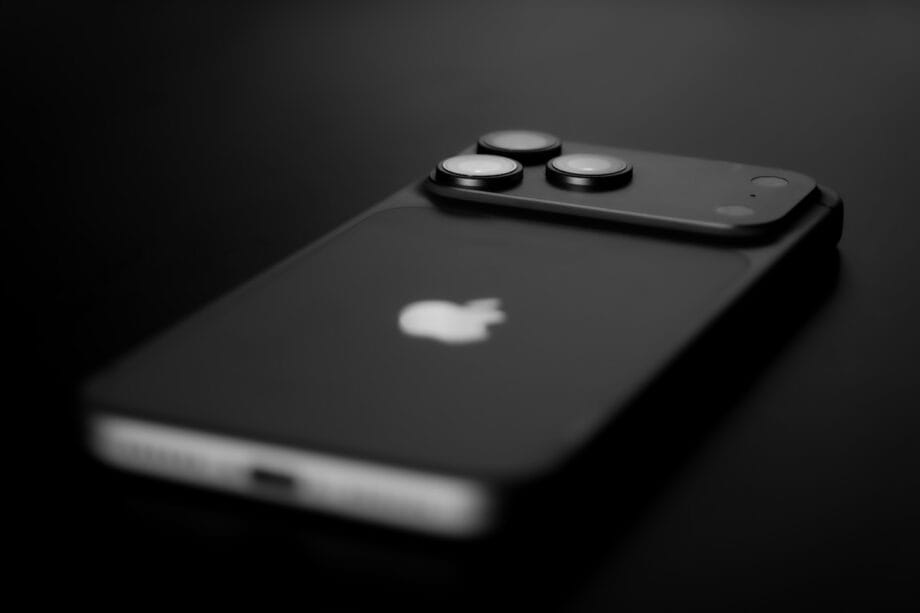
The iPhone 18 Pro Max asserts its superiority through advancements in hardware, improved thermal management, and a more substantial battery.
The introduction of manual camera controls and accelerated charging further augment its appeal as a superior device.
Meanwhile, the iPhone 17 Pro Max continues to provide an excellent array of features, offering the same display, build quality, and camera performance at a more accessible price point.
Consumers contemplating an upgrade from the 15 Pro Max or earlier iterations should weigh the merits of the 18 Pro Max, whereas those currently utilizing the 17 Pro Max might find it prudent to remain with their existing device.
Source link: News.lavx.hu.