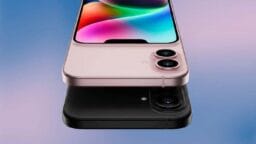
“Could you get me an iPad?” This request has recently been echoing from my daughter, a second-year middle school student, who has voiced her desire to transition from her current Galaxy smartphone and tablet to Apple’s offerings.
Despite expressing no discontent with the features or specifications of her Samsung devices, she yearns for Apple products, primarily due to the fact that the majority of her peers favor iPhones and iPads.
For adolescents, where peer perception and affiliation are paramount, Apple has transcended mere trend status to become an indispensable facet of contemporary youth culture.
Nonetheless, in the grand scheme of market supremacy, Samsung continues to maintain a formidable foothold. A nationwide smartphone utilization survey conducted by Gallup Korea in July 2026 reveals that Samsung boasts an impressive 81% share of the domestic market.
However, this narrative shifts dramatically among users aged twenty and under. Notably, a staggering 67% of young women in their twenties opt for iPhones, while over half of teenagers aged 13 to 18 indicated they would select Apple as their next smartphone provider.
This suggests that many teens are currently tethered to Galaxy devices, largely due to parental preferences or telecom restrictions.
Yet, once these individuals gain autonomy in their choices, they exhibit a readiness to migrate to Apple’s ecosystem at a moment’s notice.
The manner in which this demographic gravitates towards Apple is both consistent and self-reinforcing. For many in their teens and twenties, the iPhone acts as a crucial conduit to a vast software ecosystem that encompasses the iPad, MacBook, and Apple Watch.
What implications arise if subsequent generations manage their entire digital interactions—photography, content creation, education, and communication—within Apple’s cohesive environment?
As advancements in artificial intelligence proliferate and the integration of personal data becomes central to daily existence, Samsung’s mobile AI is at risk of relegation to mere ‘enterprise (B2B) assistant’ functionalities—limited to tasks such as summarizing meeting notes and translating professional emails for older demographics.
The danger of lagging behind in appeal to today’s youth could potentially cost Samsung the entire market within the next decade or two, a sobering predicament that the corporation must urgently acknowledge.
To evade the entrapment posed by its 81% market dominance, Samsung must actively endeavor to capture the allegiance of future cohorts. Herein lies a pivotal truth: longevity within the Samsung ecosystem is of greater significance than sheer shipment figures.
Although the company excels in delivering products of impeccable technical caliber, it has faltered in weaving a compelling cultural narrative that inspires consumer attachment.
Samsung ought to reflect on the stark contrast between the fervent crowds that camp overnight to be the first to purchase a newly launched iPhone and the orderly lines that form at Samsung locations merely moments before the doors open.
Hot Picks Today
[Exclusive] “Forecasts of Over 10 Billion, but Only 100 Million Earned”… 95% Followed This Pattern: Why Are KOSDAQ Special Exception IPOs Inflated? [KOSDAQ Inflated IPOs]①
In light of this reality, it is imperative for Samsung to transition away from a solely engineering perspective fixated on camera megapixels and processor speeds.
Rather than continuing to label itself as simply “Samsung, the technology company,” the firm must cultivate means to engender “software dependency.”

The hardware quality of flagship models like the Z Fold 8 is already well-developed. It is now time to transcend beyond the experience of innovative hardware mechanics and instead, forge exclusive software-driven communication avenues and subcultures that are accessible solely to Galaxy users.
Samsung should envisage a brand presence that transforms the act of owning a Galaxy device into a hallmark of belonging to a vanguard community.
Source link: Asiae.co.kr.