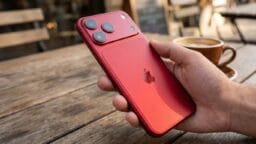
Overview of iPhone 18 Pro and 18 Pro Max Reviews
Journalists reviewing the iPhone 18 Pro and 18 Pro Max have lauded the industry-leading performance of the A20 Pro chip, alongside advancements in battery longevity, enhanced cooling mechanisms, and fresh manual camera options.
Nonetheless, a predominant concern remains regarding the devices’ rather static exterior design, increased heft, and elevated price points, with the camera enhancements yielding only marginal improvements in image fidelity. Contents
- Persistent Design, Enhanced Weight
- Variable Aperture: Subtle Variations
- Zoom Capabilities: A Comparative Disadvantage
- A20 Pro: The Defining Edge
- Battery Efficiency: Noteworthy Improvements
- Siri: Progress Yet Limitations
- To Upgrade or Not?
Persistent Design, Enhanced Weight
In terms of aesthetics, the iPhone 18 Pro and iPhone 18 Pro Max closely mirror their predecessors from last year.
Both devices retain their OLED displays, measuring 6.3 inches and 6.9 inches, respectively, with refresh rates peaking at 120 Hz.
A recent assessment by Tom’s Guide indicated that the iPhone 18 Pro Max achieves a peak brightness of 2326 nits with a modest 25% screen fill, staying competitive with the iPhone 17 Pro Max.
The singular aesthetic modification is the reduction in size of the Dynamic Island, resulting from a reconfiguration of some Face ID components beneath the display.
This alteration creates a more compact cutout capable of concurrently showcasing up to three activities. While Engadget describes this change as an enhancement, it notes the minimal impact on daily user experience.
Interestingly, the latest models do weigh more. The iPhone 18 Pro tips the scales at 211 grams, a slight increase from the 206 grams of its forerunner, while the iPhone 18 Pro Max weighs in at 249 grams, up from 233 grams.
This added heft is particularly discernible in the upper-tier model. Moreover, the physical dimensions of the devices remain largely static, allowing select cases designed for the iPhone 17 Pro to remain compatible with the current generation.
Critically, the aluminum frame has drawn negative feedback, with both Gizmodo and Engadget noting its susceptibility to scratches and dents compared to the titanium frames of former Pro models.
Variable Aperture: Subtle Variations
The primary modification in camera technology is the introduction of a variable aperture within the main 48-MP sensor, featuring six mechanical blades that facilitate an adjustment between f/1.48, f/1.8, f/2.8, and f/4.
Users now possess manual control over the aperture settings from within the standard camera interface—an unprecedented development. Additional functionalities include options for shutter speed, white balance, focus settings, and a histogram display.
Reactions to this feature, however, are mixed. WIRED regards the manual controls as a significant enhancement, noting the ability to create exquisite background bokeh at f/1.48 and emphasizing defocus techniques, leading the reviewer to forgo the conventional portrait mode.
Conversely, The Verge and Engadget express reservations, suggesting that in everyday scenarios, the distinction between f/1.48 and f/1.8 may be imperceptible owing to the constraints of the smaller sensor and computational photography.
While wider apertures shine in low-light conditions, f/4 proves beneficial for capturing group shots where depth of field is essential.
Gizmodo arrives at a similar evaluation, noting that night-time imagery does exhibit a slight improvement in dynamic range and highlights, though the differences from the iPhone 17 Pro are negligible under typical viewing circumstances.
A more pronounced advantage lies in the fact that night mode is engaged less frequently, as the f/1.48 lens permits more light ingress.
Nevertheless, the automated aperture selection can occasionally misinterpret the photographer’s intention.
An instance cited by Gizmodo involved the iPhone opting for f/1.8 while photographing figurines, leading to undesirable blurriness of distant subjects; manual adjustment to f/4 was required to achieve the vocalist’s vision.
Moreover, a peculiar limitation exists—manual adjustments for aperture and shutter speed cannot be executed via the Camera Control touch button, necessitating navigation through the on-screen interface for modifications. The Verge further commented on the diminutive size of these manual controls.
Zoom Capabilities: A Comparative Disadvantage
The other rear cameras both maintain a resolution of 48 MP, featuring a 13 mm ultra-wide lens with an f/2.2 aperture and a telephoto lens offering a 100 mm equivalent with an f/2.8 aperture, alongside a four-times optical zoom. Apple has also introduced an eight-times “optical quality” zoom and a digital zoom extending to 40x.
Tests conducted by Tom’s Guide revealed that while the iPhone 18 Pro Max performs admirably at lower zoom levels, it falls short in comparison to the Galaxy S26 Ultra at 40x zoom, where the latter retains a significantly greater amount of detail.
Thus, the latest iPhone excels as a versatile camera phone but does not outshine Samsung’s flagship models in zoom functionality.
Newly added video features comprise the option to apply a Cinematic effect in post-production, intelligent subject tracking, 4K time-lapse with Dolby Vision HDR, and manual shutter control.
Tom’s Guide commended the ability to induce blur post-capture, although Engadget pointed out that results can occasionally be inconsistent.
A20 Pro: The Defining Edge
While the tangible benefits of the variable aperture depend on specific shooting scenarios, the performance of the new 2-nm A20 Pro chip garners unequivocal praise.
This powerhouse includes a six-core CPU, seven-core graphics, and dual 16-core Neural Engines, alongside a tripling of the vapor chamber area compared to the iPhone 17 Pro.
In Geekbench 6 evaluations, the iPhone 18 Pro garnered scores of 4735 and 12,800 in single-core and multi-core assessments, while the iPhone 18 Pro Max followed closely with 4741 and 12,789 points. Comparatively, the Galaxy S26 Ultra netted 3785 and 11,563 points, while the iPhone 17 Pro recorded 3834 and 9988 points.
Tests conducted under sustained loads were particularly noteworthy. In the 3DMark Wild Life Extreme Stress Test, the iPhone 18 Pro Max achieved a remarkable stability score of 79.4%, surpassing the 65.2% from the iPhone 17 Pro Max and outshining the Galaxy S26 Ultra’s 53.9%.
However, the standard iPhone 18 Pro only managed 62.8%, slightly ahead of its predecessor at 61.1%. Thus, the most significant benefit of the revamped cooling system was evident in the Pro Max’s performance.
WIRED also acknowledged the cooling advancements. After approximately an hour of gameplay for Control, the chassis warmed uniformly without discernible hotspots, and the enlarged vapor chamber ensured prolonged high performance.
Battery Efficiency: Noteworthy Improvements
Battery longevity has emerged as a defining feature of this new generation. In Tom’s Guide’s tests, which involved continuous web page loading over 5G at a brightness setting of 150 nits, the iPhone 18 Pro achieved an impressive average of 16 hours and 17 minutes, up from 15 hours and 21 minutes with its predecessor.
The iPhone 18 Pro Max recorded even more impressive results—18 hours and 27 minutes, compared to 17 hours and 54 minutes for the previous model.
Despite these advances, Apple did not secure the title of ultimate performer in this test. The OnePlus 15 outstripped the competition with a remarkable 25 hours and 13 minutes, owing to its considerably larger silicon-carbon battery, while the Galaxy S26 Ultra managed 16 hours and 40 minutes.
In practical use, impressions remained positive. WIRED reported that the iPhone 18 Pro Max sustained usage for nearly two days with an approximate five hours of active screen time daily, retaining around 50% battery at the end of the first day.
Similarly, Gizmodo found that thoroughly depleting the Pro Max’s battery within a single day, even while filming 4K videos, gaming, and engaging in active social media use, presented a significant challenge.
Rapid charging has also seen improvements. As per Tom’s Guide tests, the iPhone 18 Pro reached 53% capacity in 15 minutes and climbed to 80% in half an hour, while the Pro Max achieved 44% and 77%, respectively. To realize these peak speeds, a compatible power adapter—absent from the box—must be utilized.
Siri: Progress Yet Limitations
The iPhone 18 Pro and Pro Max come equipped with the latest iOS 27 and revamped Siri AI. Reviewers have noted substantial advancements, including improved comprehension of personal context, enhanced interaction with on-screen elements, and the capability to execute multiple related tasks based on a single command.
Nonetheless, Siri is still classified as a beta product. Critics from Tom’s Guide point out that, in terms of conversational capabilities, it lags behind Gemini and ChatGPT, particularly highlighted by its inability to engage in in-depth dialogues concerning real-time visual captures. Engadget also underscored the beta status of Siri AI as a shortcoming of the smartphones.
To Upgrade or Not?
In summary, preliminary reviews reveal a consensus that the iPhone 18 Pro and iPhone 18 Pro Max are indeed markedly superior in terms of internal technology, although this is scarcely reflected in external attributes.
Scores of 9 out of 10 have been awarded by WIRED and Engadget, with The Verge rating them at 8 out of 10.
The standout features identified include the A20 Pro chip, refined cooling mechanisms, improved battery life, upgraded cameras, and the provision of manual controls.
In contrast, critiques have centered around the heightened pricing, increased weight, susceptibility of the aluminum chassis, and the relatively incremental image quality enhancements from the variable aperture in automatic mode.
Reviewers generally advise current iPhone 17 Pro users to approach the upgrade with caution. The differences are most compelling for those deeply engaged in photography, intensive gaming, or transitioning from several previous smartphone generations.
Notably, the Pro Max variant excels in battery longevity and sustained performance stability during rigorous tasks.
In the United States, the starting price for the iPhone 18 Pro with 256 GB of storage is set at $1,199, while the iPhone 18 Pro Max commences at $1,299, reflecting a $100 increase over last year’s pricing.
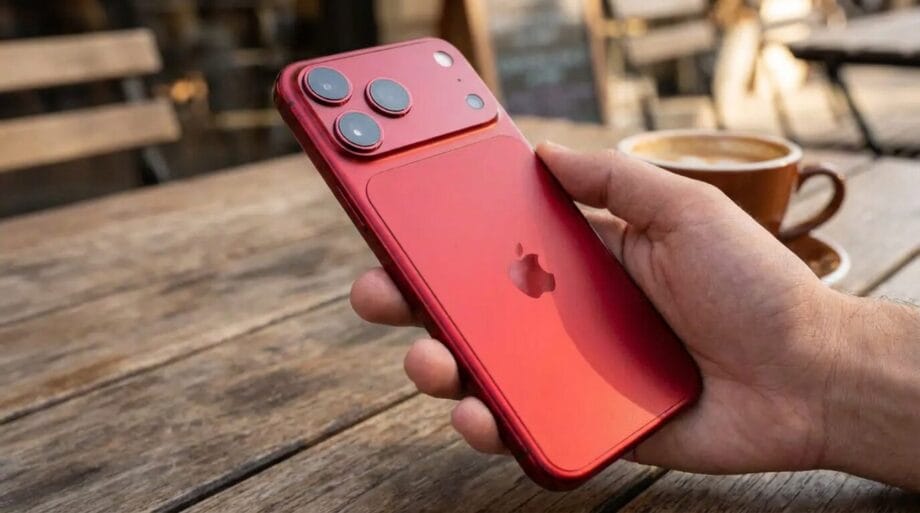
Both models come in storage configurations of 256 GB, 512 GB, 1 TB, and 2 TB. In Germany, pricing starts at €1,449 for the iPhone 18 Pro and €1,599 for the Pro Max, while French consumers will see starting prices of €1,479 and €1,629, respectively. Sales launch on September 18.
Source link: Mobidevices.com.