The Launch of Apple’s Foldable Duo: A Game-Changer in the Smartphone Market
On Wednesday, September 9, Apple unveiled the Duo, its latest flagship smartphone, marking the beginning of a new era in mobile technology.
Priced at a staggering US$1,999, the Duo is touted as the thinnest iPhone to date, albeit with a thickness that surpasses its Chinese competitors’ folding devices.
The introduction of the Duo has the potential to disrupt a market segment that has long been under the dominion of Samsung and other Chinese manufacturers like Huawei. For years, their foldable offerings have maintained a minimal market presence, primarily appealing to a niche audience.
Industry analysts have posited that Apple’s foray into the folding smartphone domain might serve as the impetus required to propel foldable technology into mainstream adoption, reminiscent of the company’s transformative impact on smartwatches and wireless headphones.
Resembling the dimensions and contours of a classic passport, the Duo unfurls to reveal a 19-cm-diagonal horizontal display, retainable for vertical viewing as well. When folded, a smaller exterior screen is visible, providing functionality without compromising the device’s compact form.
Under the leadership of new CEO John Ternus, this launch signifies the most significant revision to Apple’s principal product line since the iPhone X debuted in 2017.
With the iPhone accounting for an impressive US$209.6 billion of Apple’s total sales in the past fiscal year, the stakes are notably high.
Ternus offered a critical assessment of existing foldable models, describing them as clunky and inadequately designed for everyday tasks such as scrolling or viewing videos.
He asserted that the Duo aims to provide an iPad-like experience within a pocket-friendly device, facilitated by a unique hinge design, dual display screens with a uniform aspect ratio, and a constructed titanium chassis.
New Apple CEO John Ternus unveils the iPhone Duo smartphone in Cupertino, California, Sep 9, 2026.
“It’s both novel and reassuringly familiar. With a size akin to your passport, it fits comfortably in one hand,” Ternus remarked during the announcement.
Competitors wasted no time in chiming in on the launch. Duolingo, the popular language-learning platform, humorously referenced its own mascot, “Duo,” on social media, insinuating a playful infringement. This prompted a supportive response from Samsung Mobile US, noting, “They copied us, too.”
Analysts Anticipate Strong Market Penetration
The onus now lies on Ternus, a previously understated hardware chief, to convince Apple’s clientele of the necessity of a US$2,000 foldable device that seeks to redefine luxury for a global audience.
Analyst firms, including International Data Corporation, forecast that Apple will successfully market every foldable iPhone it manufactures and capture an impressive 40 percent of the relevant niche by the close of the following year.
Positioned as a productivity tool, the iPhone Duo aims to support business activities such as managing Zoom calls with multiple participants and offering a broader interface for applications like Slack.
This device’s expansive display allows for the simultaneous operation of multiple applications, leveraging user productivity—similar to enhancements made within Apple’s iPad line.
Apple has announced that the iPhone Duo, set to launch on October 23, will feature the innovative A20 Pro chip, alongside a proprietary C2 modem designed to phase out reliance on Qualcomm’s wireless technology.
Users can expect up to 24 hours of mixed dual-screen utilization, with rapid charging capabilities—reaching 50 percent in roughly 20 minutes.
“While Apple may have entered the foldable realm later than others, it has swiftly established new benchmarks. In a single presentation, Apple has defined the pricing and standards that competitors will now strive to match,” stated Francisco Jeronimo, Vice President for Data and Analytics at IDC EMEA.
“The principal battleground lies in China, where Huawei commands nearly 80 percent of the folding smartphone market. Apple has now provided Chinese consumers a compelling rationale to explore alternatives.”
Following the announcement, Apple’s stock price declined by 0.3 percent, settling at US$315.34.
CEO Ternus Emphasizes Privacy and AI Innovations
Tim Cook, Apple’s former CEO, ceremonially passed the baton to Ternus at the event’s outset, culminating in a lighthearted exchange about the event’s start.
The video concluded with Cook indicating, “Not me. That’s your guy,” directing focus toward Ternus.
Ternus articulated the iPhone platform as a personal AI hub prioritizing user privacy, countering others’ tendencies to collect and hoard personal data.
Trust must be based on your control over your data,” he emphasized. “That’s why Apple Intelligence operates on-device whenever feasible.”
Lilian Rincon, Apple’s AI product lead, unveiled an upgraded version of the Siri assistant during the presentation.
Additionally, the company showcased the new iPhone 18 Pro and 18 Pro Max, the latest iterations of its esteemed line, which do not boast foldable capabilities.
Pricing for the iPhone 18 Pro starts at US$1,199, while the Pro Max begins at US$1,299, with an increase of US$100 compared to their preceding models.
Updates to AirPods and Apple Watch
In tandem with these device announcements, Apple introduced a new feature aimed at mitigating concerns regarding AI-generated and altered images.
This standard, dubbed “Apple Reference Image,” aims to corroborate the authenticity of photographs captured with the new iPhone 18 Pro cameras, and it will encompass support for the emerging SynthID standard for recognizing AI-generated imagery. However, this feature will not be available within the EU or China.
The iPhone 18 Pro will also incorporate the advanced A20 Pro chip, enhancing the capability to execute sophisticated AI models directly on the device.
Moreover, a new iteration of AirPods will retail at US$129, featuring noise cancellation—a groundbreaking addition to Apple’s more affordable earbud lineup.
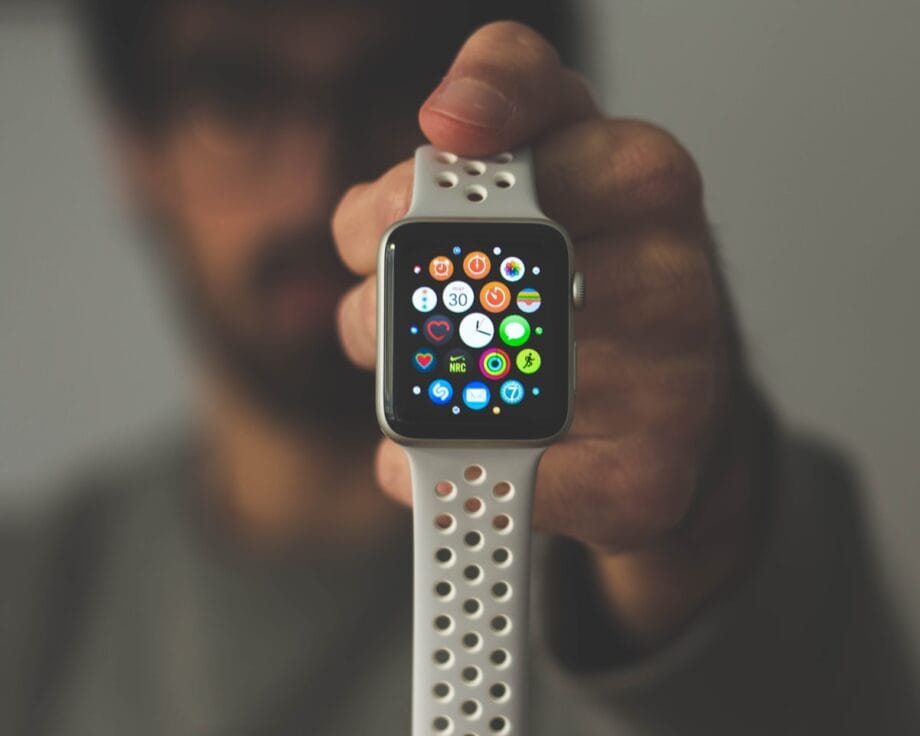
Apple also revealed the Apple Watch Series 12 and the Apple Watch Ultra 4, which are aimed at health-conscious consumers, equipped with features for recovery assessment and enhanced heart-rate monitoring.
Notably, Micron CEO Sanjay Mehrotra was present at the launch, a rare occurrence as Apple typically does not feature suppliers prominently at such events.
As Apple escalates the integration of AI capabilities across its product spectrum, the demand for high-performance memory has surged, underscoring the strategic importance of suppliers like Micron, especially amid a global memory chip shortage.
Source link: Businesstimes.com.sg.