As the time of year approaches, one question invariably resurfaces: when will Apple host its annual iPhone event?
The truth is, this date is akin to a well-rehearsed script, so predictable that it can be inked into your calendar even before Apple issues any official notification.
This seasonal anticipation has become so ingrained that the “when” has morphed into mere trivia; leaks have become unnecessary.
In a moment, I will divulge the pertinent dates with a confidence that borders on presumption, for the pattern supports it. However, the date itself is the less riveting aspect of this narrative.
Concealed within the same reports is a significant transformation in Apple’s approach to iPhone releases, and that is where your focus should reside. Let’s begin with the straightforward details before we delve into the more captivating revelations.
The Concise Answer: Two Dates to Note
If you seek merely the essential figures, here they are.
The iPhone 18 Pro, iPhone 18 Pro Max, and an anticipated foldable model, tentatively named iPhone Ultra, are projected for unveiling this September.
Bloomberg’s Mark Gurman has suggested the 8th or 9th of September as the most plausible dates for the event.
Given Apple’s propensity for issuing invitations a fortnight in advance, if Gurman’s predictions hold, we can expect to see announcements and invitations dispatched by Tuesday, August 25, or Wednesday, August 26.
Ensure these dates are noted. Late August will mark the “save the date” notification, followed by the reveal in the second week of September, pre-orders commencing that Friday, and the devices in consumers’ hands the subsequent Friday. This cadence is well-established and rarely deviates.
It is also worth noting that the event’s format has evolved; it no longer resembles the grand live presentations of yore.
Since 2020, Apple’s iPhone unveilings have transitioned into polished pre-recorded videos, as opposed to live keynotes.
In recent iterations, selected journalists have been invited to view the presentation within the Steve Jobs Theater, followed by hands-on time with the freshly launched devices.
Thus, while the ambiance of camaraderie remains—an embargo lifting, a cascade of initial impressions—the apprehension of a live demonstration has largely dissipated.
The Certainty Behind the Date
This consistency is not merely serendipitous or a relic of tradition. It is intrinsically linked to Apple’s annual business rhythm; understanding this framework renders the prediction genuinely reliable rather than speculative.
With Apple’s financial year concluding in late September, launching new iPhones prior to that deadline holds significance for performance metrics.
Backtrack from a late-September sales date, and the reveal must take place in the second week of the month, with pre-orders that Friday, and shipping the following week.
This tightly woven schedule allows little flexibility. Moreover, the two-week notice period is equally pragmatic: it affords retail partners, carriers, and media sufficient time to prepare without providing competitors an extended window to disrupt.
Thus, it is a logistical conundrum with a singular, straightforward solution, hence its consistency across years.
The recent historical context elucidates this point more effectively than words alone. Below are the last six iPhone events along with the duration between announcement and launch:
| iPhone Series | Announcement | Event | Gap |
|---|---|---|---|
| iPhone 17 | Tue 26 Aug 2025 | Tue 9 Sep 2025 | 14 days |
| iPhone 16 | Mon 26 Aug 2024 | Mon 9 Sep 2024 | 14 days |
| iPhone 15 | Tue 29 Aug 2023 | Tue 12 Sep 2023 | 14 days |
| iPhone 14 | Wed 24 Aug 2022 | Wed 7 Sep 2022 | 14 days |
| iPhone 13 | Tue 7 Sep 2021 | Tue 14 Sep 2021 | 7 days |
| iPhone 12 | Tue 6 Oct 2020 | Tue 13 Oct 2020 | 7 days |
The last four consecutive years exhibit an identical fourteen-day interval and a second-week-of-September event.
The 2020 and 2021 anomalies, characterized by shorter notice and later unveiling dates, were interruptions attributable to the pandemic rather than deviations from established norms.
Excluding those, the pattern resembles a metronome. This is why predictions can be made with utmost confidence.
The Significant Update: Apple Divides the iPhone Line
Herein lies the salient information that often receives but a cursory mention yet warrants prominence.
Traditionally, an Apple iPhone event showcased the entire lineup—the standard model, the Pro, and the Pro Max—unveiled simultaneously in September. This era has concluded.
This year, the event will reportedly feature only the higher-end models: iPhone 18 Pro, iPhone 18 Pro Max, and the foldable iPhone Ultra.
The standard iPhone 18, a budget-friendly iPhone 18e, and the iPhone Air 2 are projected to be unveiled around March 2027.
This signifies a structural overhaul of the quintessential product line in consumer technology, an evolution too substantial to overlook.
Apple is adopting a bifurcated strategy for iPhone launches—an exclusive premium presentation in autumn and a more accessible range in spring.
This approach allows the high-end devices to shine without the shadow of lower-priced models detracting from their appeal.
It also disperses Apple’s most lucrative revenue event over two quarters rather than consolidating it into a single quarter.
Moreover, this methodology ensures that the iPhone remains a topic of discussion twice yearly, rather than merely once—a significant advantage for a company increasingly reliant on sustained momentum.
For those who have pondered why the economy-friendly iPhone often seemed to occupy a peripheral role during these presentations—awkwardly positioned alongside its Pro counterparts, which it was designed to discourage buying—this adjustment reveals Apple’s resolution of that dissonance by assigning them distinct timelines.
The Role of the Foldable in the September Showcase
Another rationale for this year’s focus on premium offerings is the foldable device, tentatively dubbed the iPhone Ultra; its positioning clearly indicates Apple’s aspirations.
As Apple’s first foray into foldable technology, this product serves as a halo device. It is crafted to be the pinnacle of desirability—the most expensive, talked-about product in the lineup, redefining the very essence of high-end devices while elevating the brand image.
Such a high-profile model should not share the spotlight with a budget iPhone 18e. Instead, it ought to be presented alongside the two Pro models, maintaining an aura of exclusivity throughout the event.
Delaying the introduction of the mainstream models until March is not solely about revenue distribution; it is also about curating the atmosphere during the launch of a groundbreaking new form factor.
Whether the iPhone Ultra meets expectations remains a question for September, yet its strategic placement within Apple’s product lineup underscores the considerable stakes associated with its debut, with its timing warranting independent scrutiny.
Considerations for Potential Buyers
At its core, the essential takeaway here is pragmatic, far more pertinent than the mere date.
Should you wish to acquire a Pro, Pro Max, or the foldable model, September is your designated opportunity. Anticipate the invitation in late August, expect the unveiling around the 8th or 9th, and prepare for pre-orders during that week.
Not coincidentally, this marks the moment the iPhone 18 Pro transitions from rumor to reality, one you can assess based on its merits.
The devices have already entered mass production, thus solidifying their specifications; the actual upgrade consideration will finally have a tangible answer.
Conversely, if your interest lies with the standard iPhone 18, the budget-friendly 18e, or the iPhone Air 2, you will find September void of options.
Expect to wait until approximately March 2027 for those models, rendering any attempts to refresh Apple’s site during September futile.
For many potential buyers, prudent planning this year may entail disregarding the autumn commotion and earmarking spring instead. This shift is novel and constitutes the single most insightful takeaway from all this.
The date has never truly been a mystery: expect invitations in late August and the reveal in the second week of September, and you can set your watch accordingly.
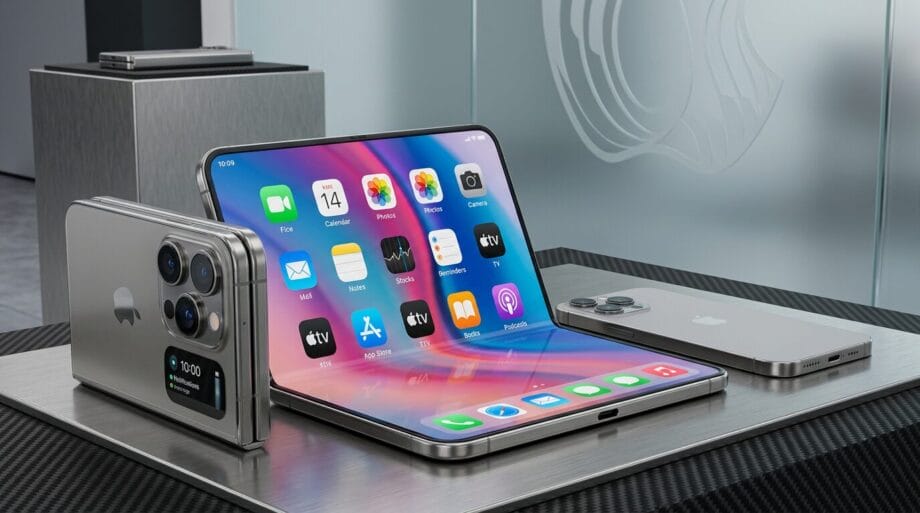
However, the underlying narrative reveals that Apple has discreetly restructured its annual iPhone launch into two distinct events: a premium showcase in autumn, accompanied by a mainstream release in spring, headlined by the foldable device.
So mark your calendar for September 8. Just remember that this year, that date represents only half of the timeline you need to consider.
Source link: Wi-fiplanet.com.