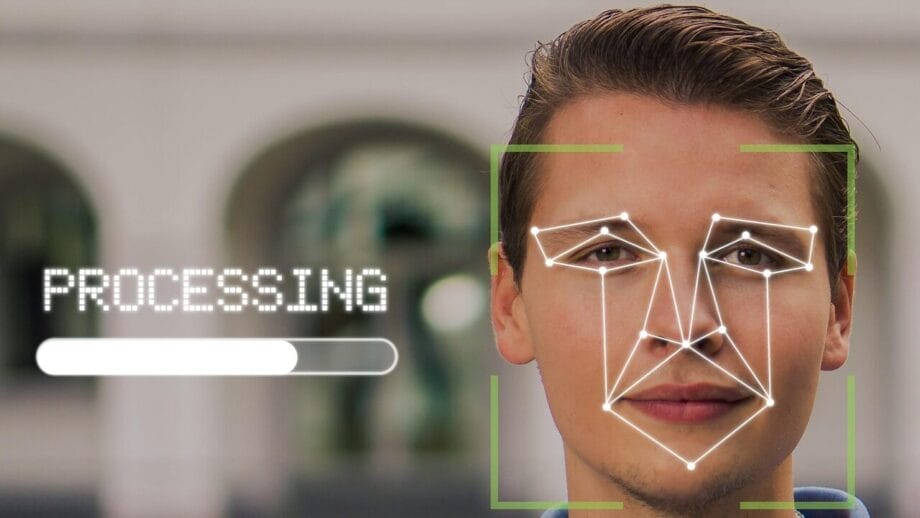
Google has unveiled an innovative Selfie Video Sign-In feature, enabling users to authenticate their identity via facial recognition to recover access to their Google Account.
This functionality is particularly beneficial for those who misplace their usual devices, forget their passwords, or attempt to log in from unrecognized hardware.
The initiative signifies an enhancement of Google’s account recovery protocol, embodying a broader trend in online security that favors biometric verification over traditional password reliance.
How does Google’s Selfie Video Sign-In feature work?
The Selfie Video Sign-In feature requires preemptive setup prior to any account access issues. During the initial registration, users engage with their device’s camera, following precise movements—such as swiveling their heads or nodding—to facilitate the capture of their visage from diverse angles.
This procedure resembles the facial recognition mechanisms employed in smartphones, yet the selfie video serves as a contingency for account recovery, rather than a routine sign-in method.
Upon completion of the selfie video recording, the data is stored securely with user consent. Should users later encounter difficulties when accessing their accounts, they are allowed to record a new selfie video.
Google conducts a comparison between the new submission and the previously stored footage to authenticate the user’s identity and restore access.
This feature is particularly advantageous for scenarios involving lost devices, password forgetfulness, or login attempts on borrowed equipment.
Can you activate Selfie Video Sign-In after getting locked out?
Importantly, users cannot enroll in the Selfie Video Sign-In feature post-lockout. This essential detail underscores the necessity of advance preparation.
To establish this feature, users should navigate to their Google Account settings, access the Security and Sign-in section, and locate the option to implement a selfie video within additional sign-in methods.
Google advises users to capture the video under adequate lighting conditions, free from obstructions such as hats or sunglasses, and ensure that no additional faces appear within the frame.
How does Google protect selfie video sign-in from deepfakes?
The introduction of facial recognition for account recovery inherently raises security issues: can a counterfeit image, pre-recorded video, or deepfake be utilized to mimic the genuine account holder?
Google asserts that a robust array of security protocols has been integrated into the system to mitigate such threats.
The verification entails juxtaposing the stored selfie video with a recent recording, while the prescribed head movements serve to verify the individual’s physical presence during the recording.
This “liveness” assessment is designed to thwart attempts by malicious actors using static images or pre-existing footage to deceive the mechanism.
Moreover, Google persists in utilizing various fraud detection techniques to monitor suspicious sign-in attempts.
What happens to your selfie video and biometric data?
While the convenience of face-based recovery is apparent, it raises substantial privacy considerations. Users are, in effect, granting Google access to a video representation of their face—a sensitive biometric asset.
Google maintains that the selfie video is recorded and stored exclusively with user consent, with provisions allowing for deletion from the account.
The company indicates that the video is intended solely for sign-in purposes, unless users opt to repurpose it elsewhere. Significantly, the stored video is encrypted for added security.
Nonetheless, the escalating reliance on facial recognition and comparable biometric technologies draws the scrutiny of privacy advocates and regulatory bodies.
Unlike a password, an individual’s facial characteristics cannot be altered if the biometric data is compromised.
This aspect emphasizes the critical discourse surrounding the security and management of such sensitive information in the context of Google’s new offering.
Who can use Google’s Selfie Video Sign-In?
This feature is not universally accessible across all Google account types. As of now, it is specifically intended for standard Google Accounts, excluding Workspace accounts, children’s accounts, and those enrolled in Google’s Advanced Protection Program, as per reports from the Hindustan Herald.
Prior to its extensive rollout, the feature underwent trials in Brazil. Google envisions the selfie video sign-in as an ancillary recovery method rather than a substitute for existing authentication methods, advocating for users to maintain multiple recovery options.
Is Google replacing passwords with face verification?
Not precisely. Google’s Selfie Video Sign-In should be regarded as an enhancement to account recovery, rather than a wholesale replacement for passwords or alternate verification techniques.
The company previously introduced passkeys, which utilize biometric authentication—like fingerprints or facial recognition—on compatible devices.
However, these passkeys are typically tied to specific devices. A selfie video may serve as an alternative for users who lack access to their passkey-enabled hardware.
This novel feature thus occupies a unique position, bridging conventional account recovery and biometric identity validation.
It provides users with a supplementary method to affirm their ownership of an account when conventional recovery avenues are unavailable.
For many, a Google Account holds a plethora of emails, photographs, documents, and vital information accumulated over time.
Concurrently, Google’s new system illuminates the increasing tension between convenience and privacy as digital services continue to pivot towards the use of biometric data for identity verification.
In conclusion, users are advised against relying solely on a singular recovery method. Maintaining up-to-date phone numbers, integrating varied recovery paths, and utilizing passkeys where feasible can significantly bolster security.
Google’s Selfie Video Sign-In could simplify account recovery, yet it serves best as an additional layer of safeguarding rather than the sole means of regaining access to an account.
Source link: Convergence-now.com.