Although Microsoft is predominantly recognized for its flagship products, Windows and Microsoft Office, the company’s eclectic 50-year history is replete with audacious experiments.
While some of these ventures floundered entirely, others contributed to the conceptual groundwork for subsequent technological advancements.
Microsoft Created an Early Smartwatch
Optical Data Transfer from a CRT
In the year 1994, Microsoft collaborated with Timex to unveil Datalink, a watch specifically designed to receive contacts, appointments, and to-do lists from a personal computer. This innovative device boasted water resistance up to 100 meters.
Its functionalities presage many features we now appreciate in contemporary smartwatches.
The principal drawback—and undoubtedly the watch’s most intriguing aspect—lay in its method of information transfer.
The computer would emit flashes from its CRT screen, which were then captured by an optical sensor on the watch to store the relevant data.
Microsoft Had a Global Map Software
They Beat Google to the Punch
In the waning years of the 1990s, Microsoft ingeniously amalgamated U.S. Geological Survey aerial imagery with Russian satellite data to develop TerraServer, a service that offered surprisingly detailed views of much of the globe at a resolution of one meter.
Despite having launched this service before Google Earth, Microsoft failed to command the early market, ultimately allowing Google to emerge as the preferred mapping solution.
Though TerraServer is now a relic of the past, Microsoft continues to operate Bing Maps, a modern contender in the mapping arena. For those interested in exploring TerraServer’s history, hundreds of captures can be accessed via the Wayback Machine.
Microsoft Created the SPOT Watch
An FM-Radio Powered Smartwatch
Long before the advent of today’s smartwatches, Microsoft introduced an innovative precursor known as the SPOT Watch.
This device could receive information via FM-radio signals, displaying a plethora of updates, from weather forecasts and sports scores to notifications from MSN Messenger or Outlook.
In essence, it operated on the same principles that enable a car radio to convey song details. Interestingly, Melitta produced a coffee maker using this technology as well.
However, much like several of Microsoft’s revolutionary hardware endeavors, the SPOT Watch had significant limitations.
It required a subscription cost of around $60—rather steep for the early 2000s—along with being bulky and regionally restricted to North America.
Its journey came to an end after merely four years, as it was eventually supplanted by more contemporary smartwatch solutions.
Songsmith Aimed to Replace Bandmates
Backing Instrumentals on Demand
Released in 2009, Songsmith was a program by Microsoft that allowed users to input a vocal track, from which it would generate complementary chords and instrumentation.
While it did not perform nearly as well as modern generative AI tools, the program gained viral fame for producing hilariously off-key backing tracks of popular songs.
A time-limited free version is still accessible from Microsoft Research’s website and is compatible with systems ranging from Windows XP to Windows 11.
Microsoft Created a Tablet That Ran XP
The Tech of the Era Was Not Ready for the Idea
Way ahead of the iPad’s unveiling, Microsoft introduced the “Tablet PC,” which operated on a specialized version of Windows XP.
In many respects, it resembled the tablets that would gain popularity in the mid-2010s, yet it was hindered by hardware limitations that rendered it unappealing to consumers.
Various models were produced, but a typical unit sported merely 128MB of RAM, a 600 MHz processor, and 20GB of storage. Battery life hovered around three hours before requiring a fresh battery.
Even against the standards of its time, these tablets often appeared underpowered. Competing desktop PCs released concurrently typically featured processors at or above 1 GHz, with RAM capacities ranging from 256MB to 1–2GB, plus significant storage—often upwards of a hundred gigabytes.
The operating system was primarily optimized for keyboard and mouse usage, making the user experience challenging when employing a touch interface.
A significant drawback was also the high price point, usually exceeding thousands of dollars. While this is not uncommon in the high-tech consumer marketplace, it made widespread adoption challenging.
Microsoft Has Great Ideas, But They Often Fail to Capture an Audience
One common thread throughout Microsoft’s experimental forays is their remarkable capacity for innovation. Regrettably, they often seem to be ahead of their time, with groundbreaking technologies that elude the audiences they merit.
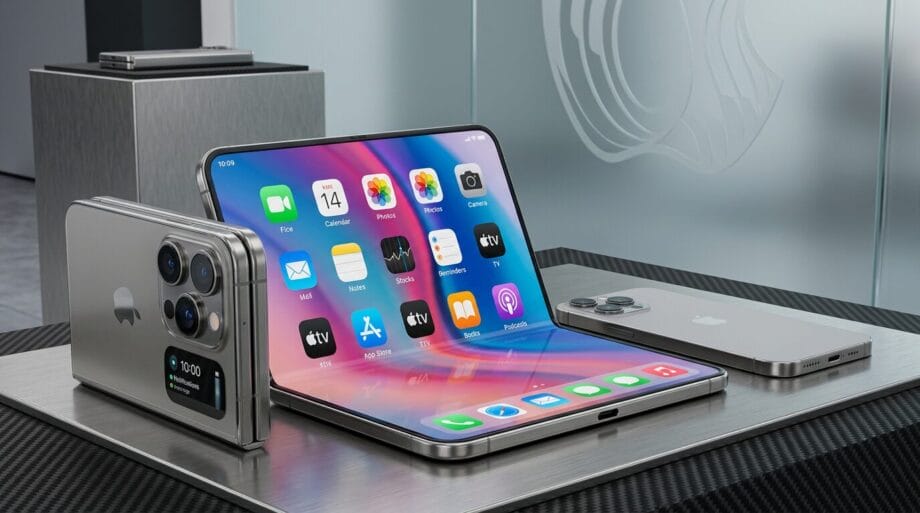
These examples merely scratch the surface. Microsoft has previously developed numerous dual-screen devices reminiscent of today’s foldable phones, as well as chat agents capable of animating responses.
So, the next time Microsoft unveils something that intrigues or perplexes you, consider the possibility that it may represent a nascent version of a technology poised to gain immense popularity in the future.
Source link: Latestly.com.