Huawei Unveils the MatePad Pro Max: A Revolutionary Tablet
Huawei consistently captures attention with its innovative approaches, and the recent launch of the MatePad Pro Max in China is no exception. This product marks a significant moment in the tablet landscape.
The Headline Numbers
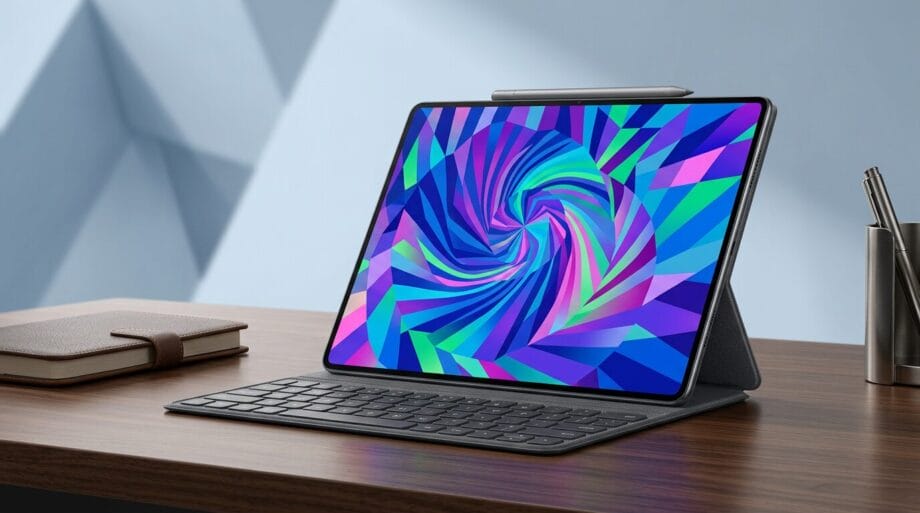
With a mere thickness of 4.7mm, the MatePad Pro Max emerges as the slenderest tablet currently available, outpacing even the slim Honor MagicPad 4 Pro.
Its 13.2-inch flexible OLED display is seamlessly integrated into a device that weighs only 499 grams, featuring a minimalist design with 3.55mm bezels enveloping the screen.
Not a single notch or cutout disrupts the immersive viewing experience; it’s a flawless edge-to-edge display.
The screen boasts a remarkable resolution of 3000 x 2000 pixels, achieves peak brightness levels of 1600 nits, and delivers a refresh rate of 144Hz. These specifications position it competitively among large-format tablets on the market.
The Chip That Makes Everything Go
At the heart of this device lies the Kirin T93 Pro chipset, which Huawei regards as the tablet-oriented counterpart to the Kirin 9030 Pro.
Paired with HarmonyOS 6.1, this innovative chip claims a substantial 45% increase in performance compared to its predecessor, the MatePad Pro 13.2. This impressive leap signifies a generational advancement rather than a mere incremental upgrade.
The performance enhancements are particularly evident during multitasking, allowing the device to seamlessly manage up to 20 applications operating simultaneously, aided by Huawei’s Ark Engine that ensures fluidity even under heavy loads.
Desktop Mode Without the Desktop
One intriguing feature of the MatePad Pro Max is Huawei’s strategic marketing of the device as a viable laptop alternative, transcending the typical role of tablets as mere media consumption devices.
A simple four-finger swipe transitions the interface from standard tablet mode to a full PC-style desktop environment, supporting traditional windowed applications, including the WPS Office suite.
When paired with a Huawei Glide Keyboard and mouse, the user experience transforms into a fully-fledged office-capable tool.
Additionally, there is an exclusive Educational Space mode, specifically designed to be free of distractions and structured for learning.
This mode targets the growing student demographic that tablet manufacturers are increasingly catering to worldwide.
The Camera Story
Unlike many tablets that regard their cameras as secondary features, the MatePad Pro Max elevates this aspect significantly.
It incorporates a robust 50MP rear camera equipped with autofocus, suitable for document scanning and video calls without compromising on quality.
Meanwhile, the 12MP front-facing camera discreetly embedded within the bezel enhances the quality of video conferencing while maintaining the display’s pristine aesthetic.
A particularly noteworthy aspect of the camera system is its integration of a second-generation multispectral lens—a first-ever for tablets.
Multispectral imaging enables the capture of light across a wider spectrum of wavelengths, resulting in more accurate color representations and potential applications in health or material sensing.
Observing how Huawei plans to harness this technology in consumer contexts will be fascinating as its software ecosystem evolves.
Battery and Charging
Powered by a substantial 10,400mAh battery, the MatePad Pro Max is designed to accommodate its impressive size.
It supports 66W wired fast charging for quick top-ups and 40W reverse charging, allowing the tablet to serve as a power bank for other devices—practical features for a device marketed as a productivity powerhouse.
Pricing
The MatePad Pro Max is set to debut in China, offered in Blue and Space Gray across two configurations: Standard and Enjoy Edition.
Prices start at 5,999 yuan for the base Enjoy Edition (12GB RAM, 256GB storage) and go up to 12,999 yuan for the premium Standard Edition, featuring 20GB RAM, 1TB of storage, and the included Huawei Star Leap Keyboard.
A PaperMatte display variant will also be available, catering to those seeking reduced glare for reading and writing.
In recent years, Huawei has developed an ecosystem that largely functions independently of Google and Western software platforms, a necessity prompted by US sanctions, which has evolved into a distinct design philosophy.
HarmonyOS 6.1 represents the latest iteration of this vision, with the MatePad Pro Max as its flagship hardware.
Whether this device can achieve significant traction beyond China hinges on factors extending beyond mere specifications.
Yet, as a testament to Huawei’s engineering capabilities focused on a singular product, the MatePad Pro Max is an undeniably compelling manifestation of ambition—strikingly thin and robustly powerful.
Source link: Vocal.media.