Apple’s Anticipated Foldable iPhone Sparks Online Controversy
Apple’s prospective foldable iPhone has ignited fervent discourse on social media well ahead of any formal unveiling.
Enthusiasts and critics alike are engaged in vigorous debates, fueled by several leaked design concepts and an insightful analysis video that juxtaposes Apple’s forthcoming device with the established foldable smartphones from Huawei.
The dialogue intensified following coverage by a prominent technology analysis channel, which delved into potential design trajectories for Apple’s foldable smartphone.
Subsequently, online forums buzzed with observations about the striking similarities between the speculated iPhone Ultra Fold and Huawei’s existing models.
Hashtags and remarks insinuating that Apple may have drawn inspiration from Huawei began to trend among tech aficionados.
Even though Apple has yet to confirm the existence of a foldable iPhone, ongoing leaks and concept visualizations continue to pique widespread interest.
Reports indicate that the company is developing a high-end foldable device, characterized by an expansive display, sophisticated artificial intelligence capabilities, and premium build quality.
This anticipated product is seemingly aimed at the burgeoning foldable smartphone sector, which is presently dominated by titans such as Samsung, Huawei, and Motorola.
Huawei has solidified its foothold in the foldable arena through a series of innovative releases over recent years. Its smartphones typically feature slim profiles, expansive inner displays, and distinctive folding mechanisms.
Given these shared design attributes, some netizens speculate that Apple may follow suit, adopting a similar aesthetic for its inaugural foldable smartphone.
Conversely, a cadre of technology experts has countered the criticisms. Industry analysts contend that foldable smartphone designs inherently exhibit common characteristics due to technological constraints and engineering challenges.
Experts maintain that creators frequently employ analogous hinge systems, display configurations, and folding methodologies, as the category itself presents limited design leeway.
This debate also underscores escalating anticipations surrounding Apple’s foray into the foldable market.
Observers are keenly monitoring the situation, as Apple has historically taken a measured approach when entering new product categories, often prioritizing technology refinement over first-mover advantage.
This strategy has only heightened curiosity regarding how the tech giant intends to set its foldable iPhone apart from its competitors.
For the time being, many users online have expressed enthusiasm rather than apprehension. Some assert that Apple’s software optimization and ecosystem cohesion could enable the foldable iPhone to differentiate itself, despite potential design resemblances.
Others argue that contemporary innovation is increasingly focused on usability, durability, and seamless multitasking rather than mere appearance.
At present, the ongoing discourse remains rooted firmly in rumors, concept imagery, and conjecture. Apple has neither validated the development of a foldable iPhone nor addressed concerns regarding design parallels with Huawei.
Nevertheless, the escalating dialogue underscores the significant attention that the company’s speculative foldable device is garnering in anticipation of an eventual launch.
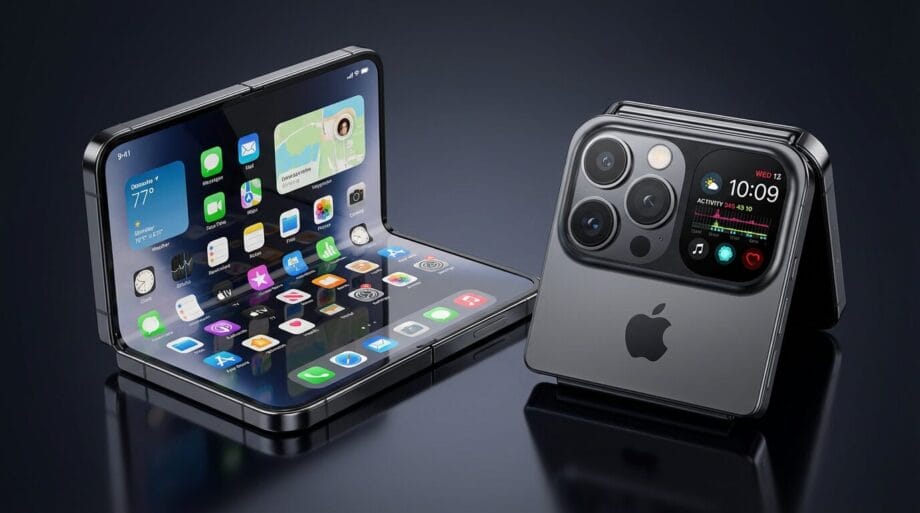
As foldable smartphones gain traction within the mainstream market, Apple’s eventual entry could fundamentally alter the competitive landscape in the premium smartphone domain.
Until then, the discussion surrounding the comparative designs of Apple and Huawei is poised to persist, captivating tech enthusiasts across the globe.
Source link: Thesouthindiatimes.com.