The Resurgence of Face-to-Face Interaction in a Digital Age
Recently, I found myself in a rather extraordinary setting: a vibrant dining hall bustling with 200 individuals, each engaged in animated conversation.
Remarkably, there were no screens in sight. Couples were not ensnared by the allure of their devices, and the atmosphere was devoid of people covertly checking text messages beneath tables. There were no intrusive ringtones or urgent apologies like:
“Pardon me, but I must take this call. My feline companion feels neglected, and I need to confer with her via speakerphone.”
This particular evening took place in London at a friend’s avant-garde arts club restaurant, which had instituted two irreproachable rules:
- No cellular devices.
- No exceptions whatsoever.
A grand oval table seating 20 patrons offered a welcoming space for those dining alone. With no phones to divert attention, strangers were compelled to converse, fostering unexpected camaraderie.
Overall, this enforced interaction generated a palpable sense of joy among the attendees.
It served as a nostalgic reminder of an era when communication was predominantly face-to-face rather than through screens. In that moment, I recognized how profoundly I had yearned for such authentic encounters.
The trend of banning mobile devices and social media in educational institutions, including in Quebec, marks a progressive step forward. Yet, one might argue that broader societal restrictions could be greatly beneficial.
Once, we admonished our children against fixating on their phones in social settings or during meals. Today, however, it seems as though nearly everyone is subservient to their devices.
News enthusiasts like myself find themselves ensnared by the incessant cycle of 24/7 news alerts, bombarded by updates upon updates.
For many, the incessant barrage of texts, gaming, and endless scrolling is further perpetuated by notifications designed to keep one ensnared in the digital web.
For a significant number of young individuals, social media serves as a constant reminder of others enjoying superior experiences in posh establishments.
Thus, the mantra rings true: “Compare and despair.”
The paradox remains: while we are more connected than ever—bridging relationships with friends, colleagues, and long-forgotten acquaintances—we also experience a profound sense of loneliness.
We are intimately aware of this disconnect, primarily because we’ve perused myriad studies—on our phones, no less.
We understand that our smartphones are rewiring our attention spans to mimic those of goldfish with Netflix subscriptions.
The notion of checking our social feeds before engaging with another human or enjoying a morning cup of coffee is likened to an unhealthy habit—endorsed solely by the omnipresent Dr. Big Tech, who invariably prescribes more of the same.
Countless well-compensated tech engineers labor relentlessly to keep us scrolling, enabling their companies to inundate us with advertisements or harvest our data at relentless intervals. We acquiesce, pressing “AGREE” repeatedly, much like lab rats conditioned to respond.
Recent legal actions have implicated two major tech corporations in their deliberate efforts to “addict” users through algorithms akin to those used by tobacco companies to foster addiction.
Our resolve falters against this vast collective of engineers crafting a cacophony of alert sounds and notifications—dings, pings, vibrations, emojis, and countless algorithms designed to render us perpetually hooked on these inexorable digital stimuli.
The advent of artificial intelligence intensifies this cycle, as individuals seek out AI “companions” over potentially irritating human interactions.
AI is always agreeable and aims to please, a contrast to the occasional discord that arises in real friendships.
Humans, of course, have a historical proclivity for engaging in behaviors counterproductive to their well-being—be it smoking, overindulgence, or sedentary lifestyles.
Our dependency on smartphones constitutes merely another chapter in a narrative titled “Behaviors We Engage in Despite Knowing Better,” which we are concurrently consuming via our devices.
What renders the smartphone uniquely insidious is its ability to proffer solutions for every dilemma it amplifies, through an array of “self-help” applications readily available on our screens.
Experiencing anxiety induced by social media? Meditation apps lie tantalizingly between your Twitter feed and Candy Crush.
Struggling with insomnia due to after-hours scrolling? Your device can provide calming sounds of nature, all while you mindlessly consume provocative news just before dawn.
Concerned about excessive screen time? Your phone dutifully generates reports urging you to regulate your usage, ready to offer limits at the mere press of a button.
However, the default action is typically to select “SKIP FOR NOW,” precisely as designed by tech architects.
A growing number of individuals are mounting a personal rebellion—organizing phone-free gatherings that mandate the confinement of devices like hazardous materials.
Moreover, “dumbphones” devoid of internet access are gaining traction as a means of weaning users from screen dependency.
In Quebec, the prohibition of phones in schools has demonstrated encouraging outcomes, revealing that increased restrictions can alleviate feelings of isolation among students.
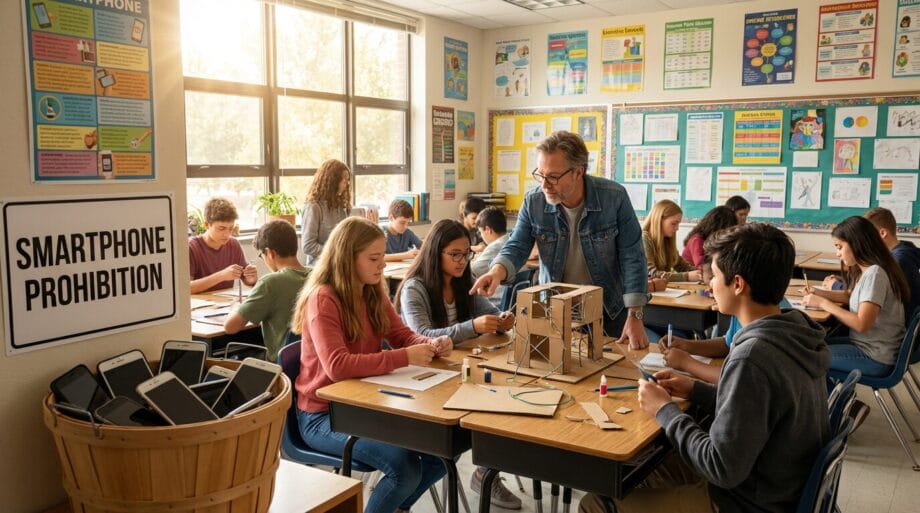
It may be time for society to impose stricter measures—a mandate that permits phone usage only during certain hours, to replicate the experience I encountered in that London dining space.
Consider a regulation adorned with signs declaring: “No phone usage, Mon-Wed-Fri, 9-11 a.m. and 5-7 p.m. Offenders will face penalties.”
The call for a technological timeout grows more urgent. So, if you are currently engaging with this content via your smartphone, I urge you to set it aside…
Source link: Montrealgazette.com.