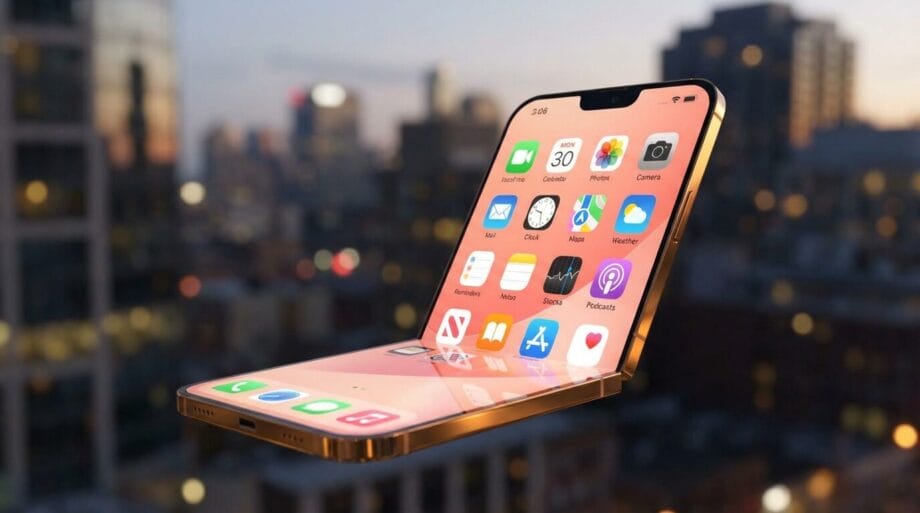
Apple is gearing up to unveil its inaugural foldable iPhone in September 2026, signaling a pivotal transformation in its hardware strategy.
Tentatively branded as the “Ultra,” this groundbreaking device is anticipated to launch alongside the iPhone 18 Pro series. Recent leaks reveal a book-like design that morphs from a compact phone into a tablet-sized display.
Industry insiders contend that Apple has prioritized a seamless, crease-free experience—an often-cited challenge for existing foldable models.
This strategic maneuver aims to seize a premium segment of the market currently dominated by rivals such as Samsung and Huawei.
Engineering hurdles concerning display durability and thickness have necessitated several distinctive design decisions for this forthcoming flagship.
Innovative Hinge Technology and Display Specifications
The foldable iPhone is poised to feature a 7.8-inch internal display when fully extended, offering a workspace closely resembling that of an iPad mini. In its closed state, users will likely engage with a 5.5-inch external display exhibiting a 4:3 aspect ratio.
This broader, shorter format sets it apart from the elongated designs prevalent in many current foldables. Apple is rumored to utilize a titanium and aluminum frame to preserve structural integrity while achieving a remarkably thin chassis of merely 4.5mm when unfolded.
To eradicate the perceptible crease, Apple is reportedly integrating a liquid metal hinge mechanism combined with specialized material properties. This advanced approach aims to manage structural stress more efficiently than conventional mechanical hinges.
Additionally, the display panel might incorporate touch sensors directly into the glass, potentially reducing thickness by nearly 20 percent. These innovations are part of a broader initiative to comply with stringent internal criteria for brightness and energy efficiency.
Internal components are anticipated to be powered by the A20 Pro chip, fabricated on a state-of-the-art 2nm process. This processor is expected to be coupled with 12GB of RAM, integrated directly onto the chip wafer to enhance data processing speeds.
A dual 48MP camera system is projected for the rear; however, current configurations may forgo a telephoto lens to maintain the device’s slender profile. Reports suggest a battery capacity between 5,000 and 5,500 mAh to accommodate the larger screen real estate.
Design Considerations and Market Positioning
The quest for an ultra-thin foldable design has reportedly prompted the removal of Face ID in favor of a Touch ID sensor embedded in the power button.
This strategic alteration facilitates a more streamlined bezel and diminishes the complexity of the sensor array in a folding chassis.
For selfies and video conferencing, Apple is expected to employ a punch-hole camera design on both internal and external displays rather than an under-display solution.
Analysts project that this device will be positioned as the priciest model in Apple’s portfolio, with price estimates commencing at $2,000.
This premium pricing underscores the high costs associated with specialized materials such as ultra-thin glass, alongside the intricate assembly required for the hinge.
Although initial supply may be constrained, the launch is expected to catalyze significant growth in the global foldable smartphone market by late 2026.
Current reports indicate that manufacturing validation is underway, with supply chain partners in Asia intensifying production capabilities for the 2nm components.
Despite the modifications in biometric technology and the refined camera array, the device is likely to feature a custom version of iOS tailored for multitasking across a more expansive display.
This software integration remains a crucial element in how Apple intends to distinguish its foldable experience from existing competitors.
The anticipated arrival of a foldable iPhone in 2026 demonstrates Apple’s confidence in the maturation of flexible display technology.
By fusing a titanium frame with an almost crease-free screen, the company intends to redefine the premium mobile category. This forthcoming release is poised to establish a new standard for the interaction between hardware and software in a foldable format.
FYI (keeping you in the loop)
When will the Apple foldable iPhone be released?
The device is slated for launch in September 2026, likely coinciding with the introduction of the iPhone 18 Pro and Pro Max models.
Some analysts suggest a late 2026 release could occur in the event of minor production delays. How much will the Apple iPhone Ultra foldable cost?
Price estimates for the foldable iPhone begin at over $2,000, with some forecasts projecting a high-end price tag of $2,399.
This reflects the premium materials and advanced 2nm chip technology utilized within the device, marking it as the most expensive iPhone to date. Will the foldable iPhone have Face ID?
Current leaks suggest that Apple will substitute Face ID for Touch ID in the foldable model. The fingerprint sensor is anticipated to be integrated into the side power button, facilitating the device’s exceptionally thin 4.5mm profile when unfolded.
Source link: Inews.zoombangla.com.